White-Label Reporting for SaaS in 2026: Why It Matters
TL;DR: SaaS teams often struggle to deliver reporting that matches their product’s branding and supports multi-tenant needs. Building reporting in-house takes time, delays releases, and adds engineering complexity. White-label reporting solves this by enabling fully branded, in-app reporting without heavy development. It helps SaaS products launch faster, close enterprise deals, and deliver a complete user experience.
Introduction
For many SaaS products, reporting becomes a blocker when customers expect it to be fully integrated and branded as part of the product. Many enterprise buyers require reporting that doesn’t show third-party branding or send users to a separate portal.
At the same time, building a scalable reporting system from scratch is complex, requiring time, engineering effort, and ongoing maintenance. This often delays product releases and impacts go-to-market speed.
White-label reporting solves this by enabling SaaS platforms to embed fully branded, in-app reporting that works as a native feature. In this article, we’ll break down how it works, its key benefits, and common SaaS use cases.
What is white-label reporting for SaaS?
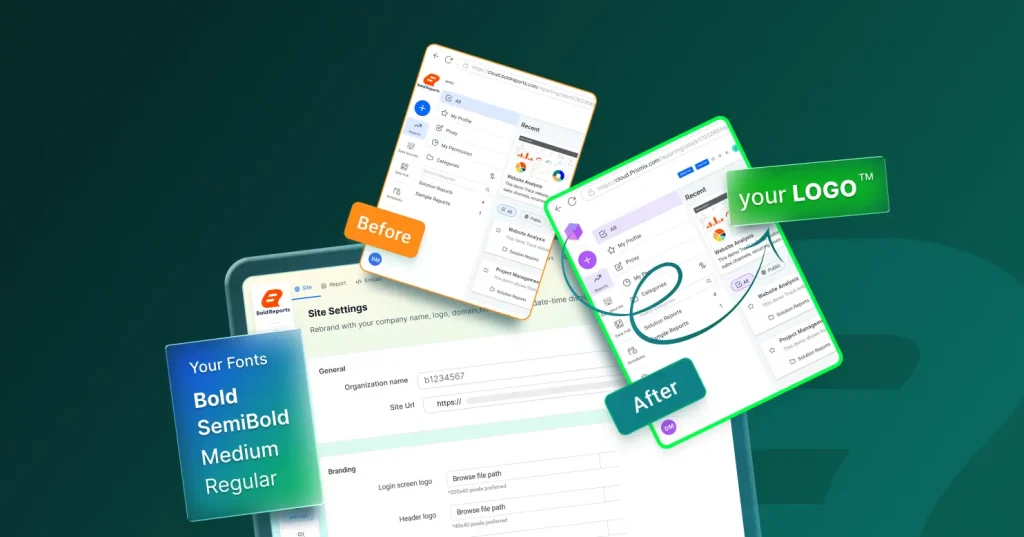
White‑label reporting is a reporting approach that enables businesses to deliver reports under their own brand without disclosing the third‑party platform behind them. It offers complete customization of elements such as logos, colors, domains, and report layouts, allowing organizations to present data consistently and professionally as an integral part of their product or service.
Why white-label reporting matters for SaaS in 2026
White-label reporting helps SaaS companies enhance product value and improve customer experience. The key benefits include:
-
- Faster time to market: White‑label reporting lets SaaS companies launch advanced reporting quickly without spending months building reporting features from scratch.
- Consistent brand look and feel: Fully branded reports match your product’s visual identity, reinforcing trust and continuity.
- Improved customer experience:Embedded, in-app reporting lets users access insights without leaving the product, reducing friction and improving usability.
- Higher customer retention: Native reporting becomes part of daily workflows, increasing product stickiness, and reducing churn.
- Lower development and maintenance costs: Outsourcing reporting infrastructure reduces ongoing engineering effort, maintenance, and technical debt.
- Focus on core product innovation: By eliminating the need to maintain reporting systems, teams can concentrate on building features that differentiate the product.
Key features to look for in a white-label reporting tool in 2026
Choosing the right white-label reporting tool in 2026 means finding a solution that lets you deliver a reporting experience fully under your own brand while also meeting modern expectations for scalability, security, and flexibility.
Key features to prioritize:
-
- Advanced brand customization that allows you to match reporting with your product’s logos, colors, themes, and interface elements.
- A custom identity experience that replaces all third‑party branding across login pages, emails, site names, and user interfaces.
- Localization support that enables reporting in multiple languages, regional formats, and time zones for global audiences.
- Centralized administrative control that makes it easy to manage users, roles, permissions, and access policies securely.
- Flexible deployment options that support on‑premises, cloud, containerized, and hybrid environments.
- Modern embedding capabilities that allow seamless integration of reports into applications using APIs, SDKs, and popular frameworks.
Use cases for white‑label reporting in SaaS
White-label reporting has become a key feature for SaaS companies looking to improve retention, and unlock new revenue streams. Common use cases include:
White-label reporting for healthcare
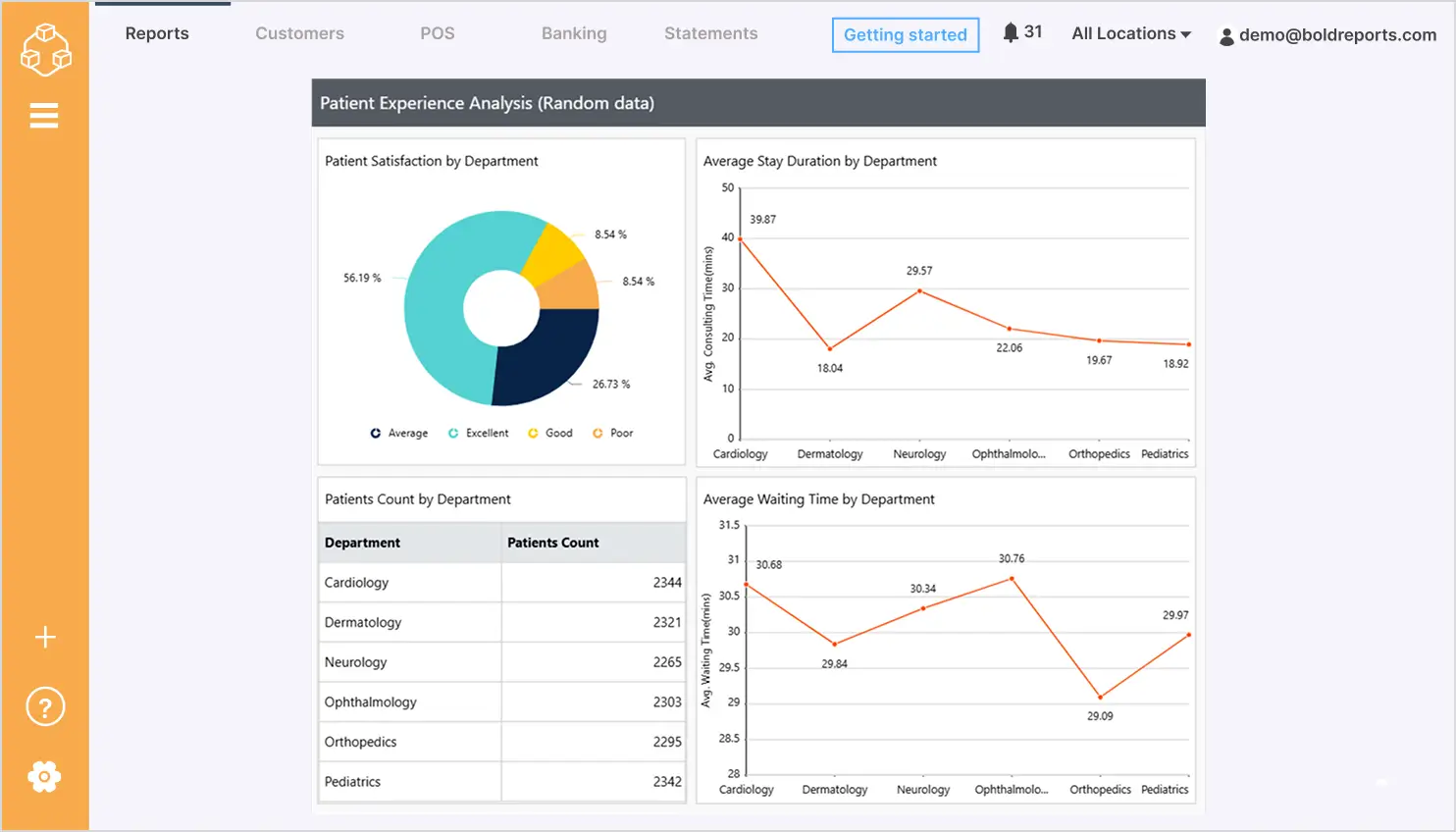
Healthcare SaaS platforms use white‑label reporting to present real‑time patient experience fully branded to each customer’s identity. Reports seamlessly adopt the healthcare organization’s logo and visual style, allowing administrators to interact with reporting as a natural extension of their own digital environment. Embedded reports update instantly as patient feedback, wait times, and service interactions change, giving teams immediate visibility into patient experience trends. This branded experience enables healthcare teams to improve service quality, all without disrupting clinical workflows.
White-label reporting for human resources (HR)
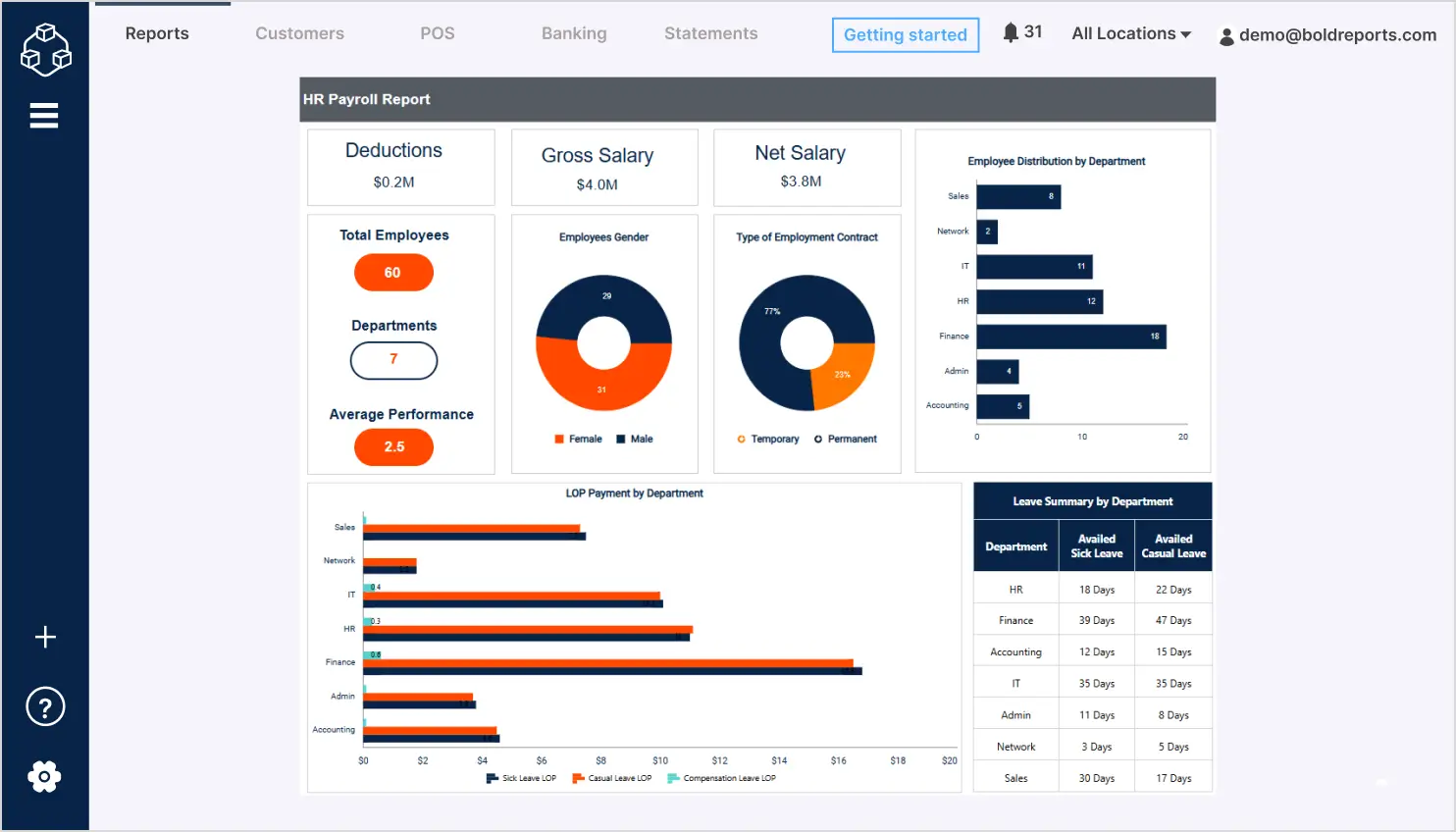
HR SaaS platforms use white‑label reporting to present real‑time payroll and workforce insights fully branded to each organization’s identity. Reports adopt the company’s logo and visual style, allowing HR teams to view payroll reports, salary details, deductions, and employee compensation data as part of their own system, not a third‑party tool. Embedded reports refresh automatically as payroll data is processed or updated, giving teams immediate visibility into payroll status and trends while supporting accurate, uninterrupted HR operations.
White‑label reporting for E‑commerce
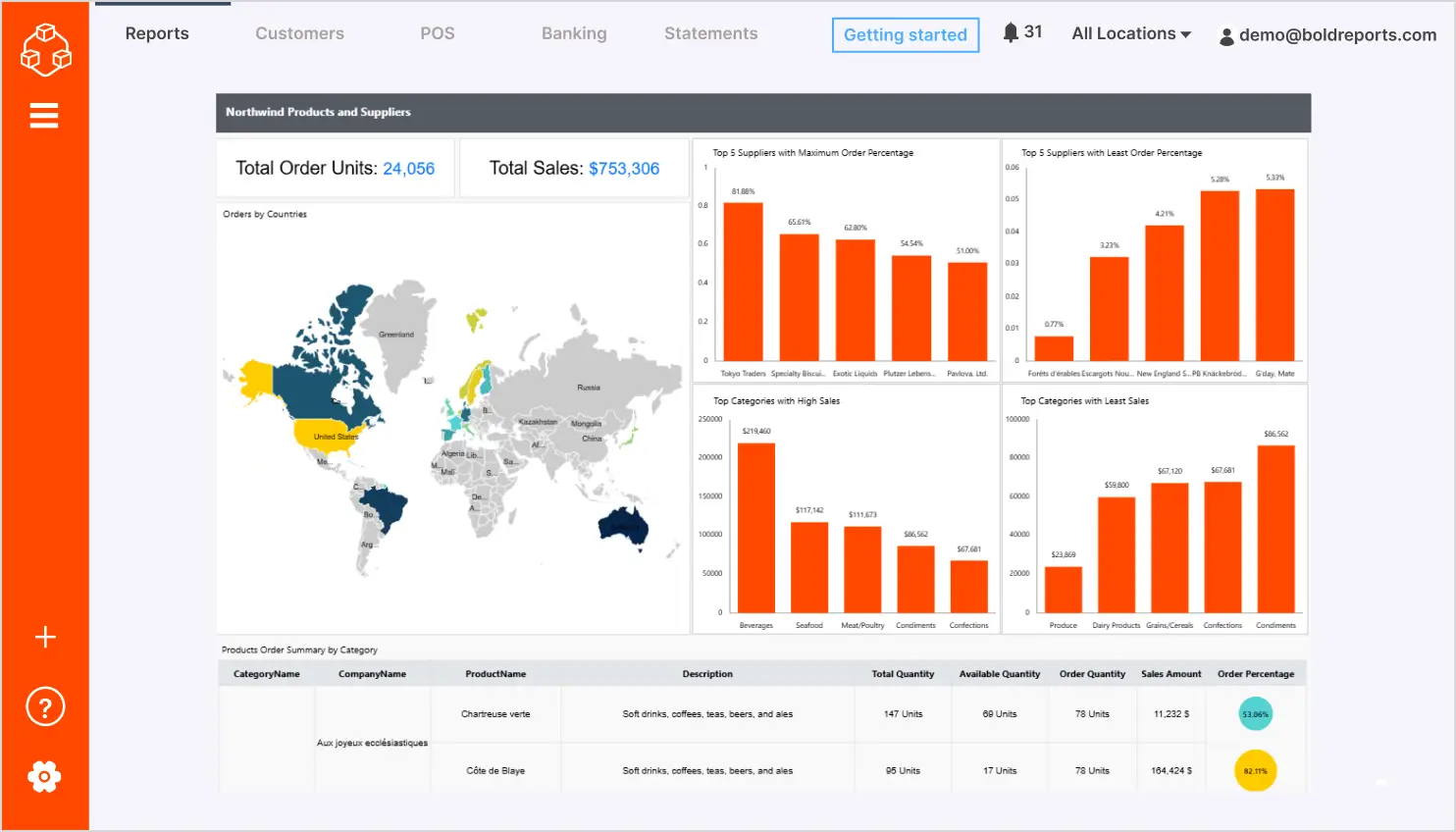
E‑commerce SaaS companies use white‑label reporting to deliver real‑time sales and inventory insights fully branded to each merchant’s identity. Reports adopt the retailer’s visual style, making reporting feel like part of the commerce platform rather than an external tool. Embedded reports refresh instantly as orders are placed, inventory levels change, or products are restocked, enabling merchants to monitor performance, manage stock, and make timely decisions without leaving their workflow.
How Bold Reports supports white-label reporting
White-label reporting helps you deliver branded, embedded reports without the burden of development. Whether you’re in healthcare, retail, manufacturing, or SaaS, platforms like Bold Reports® empower you to scale, customize, and rebrand.
Bold Reports allows you to:
-
- Maintain full rebranding with no visible third‑party identity.
- Custom identity lets you brand reports with your own logos, domain, and visual style.
- Admin control lets you manage users, permissions, and settings from one place.
- Embed reports seamlessly within your application across modern frameworks.
- Leverage built‑in multi‑tenancy for secure, scalable SaaS deployments.
- Ensure enterprise‑grade security with robust role‑based access control.
- Choose flexible deployment options: cloud, on‑premises, or containerized.
- Support global audiences with scalable, localization‑ready architecture.
To learn more about white-label in Bold Reports®, explore our blog on White-Label Reporting: What it is, Benefits & Use Cases. Want to see what fully white-labeled, in-app reporting looks like in a real SaaS workflow? Try Bold Reports for free, or book a personalized demo to review embedding, tenant security, and branding requirements.
Frequently asked questions
- 1.
What is white-label reporting?
White-label reporting lets you provide reporting under your own brand by removing third-party branding and embedding reports directly into your application, so reporting feels like a native feature.
- 2.
Does Bold Reports support white-labeling in both cloud and on-premises deployments?
Yes. Bold Reports supports white-labeling for both cloud and on-premises deployments, enabling consistent branding regardless of the hosting model.
- 3.
Can I run reports from my own domain?
Yes. You can use your own custom domain or subdomain to deliver a seamless, trusted reporting experience.
- 4.
Will white-labeling affect future product updates?
No. Branding customization doesn’t block updates. You can continue receiving improvements and security updates without losing your white-label configuration.
- 5.
What support is available during white-label setup?
Bold Reports provides onboarding assistance, documentation, and technical support to help with branding, embedding, deployment, and tenant or security setup.