Business Reporting in 2026: Benefits, Features, & Use Cases
TL;DR
Business reports help organizations analyze data, track performance, and make informed decisions. In 2026, modern business reporting software enables real-time insights, automated report generation, and improved data accuracy across departments and industries.
Introduction
Over the past few years, business reporting has evolved from static report generation into a critical function for delivering real-time insights and enabling data-driven decision-making.
However, many organizations still rely on fragmented tools and manual reporting processes that struggle to keep pace with growing data volumes and increasing demand for real-time reporting. As a result, businesses face reporting bottlenecks, inconsistent data, and delays in decision-making that impact business performance.
Modern businesses need reporting that goes beyond basic data presentation. They require:
-
- Real-time visibility into performance metrics.
- Automated report generation and delivery.
- Seamless integration with existing applications and workflows.
- Accurate, structured outputs for operations and compliance.
This shift is why business reporting has become a necessity in 2026.
In this guide, you’ll learn what business reporting is, why it matters in 2026, key use cases, best practices, and how to choose the right business reporting software for your needs.
What is business reporting?
Business reporting is the process of collecting, analyzing, and presenting data in an organized format to support informed, data-driven decision-making. It supports key report types, such as financial, operational, and sales, helping organizations:
-
- Track performance across departments and reporting periods.
- Identify trends and patterns to support strategic planning.
Modern business reporting tools integrate data from multiple sources, ensuring accuracy, consistency, and real-time access to actionable insights.
Why business reporting matters in 2026
In 2026, business reporting is essential for organizations operating in a highly data-driven and competitive environment. As data volumes grow and real-time expectations increase, businesses rely on accurate, timely reporting to improve performance, reduce risks, and make faster, smarter decisions.
1. Real-time business performance monitoring
Business reporting provides real-time visibility into key performance indicators (KPIs), enabling organizations to continuously monitor progress.
Rather than relying on static or outdated reports, teams can:
-
- Track performance dynamically.
- Identify trends early.
- Respond quickly to changing conditions.
This enables businesses to stay aligned with their goals, improve accountability, and drive consistent performance across departments.
2. Data-driven decision-making
In fast-paced environments, decisions must be both accurate and timely. Business reporting delivers structured, reliable data that eliminates guesswork and reduces reliance on assumptions.
With clear, actionable insights, stakeholders can:
-
- Evaluate different options effectively.
- Compare performance outcomes.
- Make confident, evidence-based decisions.
This leads to better decision quality, faster execution, and stronger business outcomes.
3. Early risk detection and prevention
Effective reporting plays a critical role in early issue detection, helping organizations identify problems before they escalate.
By continuously analyzing business data, organizations can:
-
- Detect anomalies and inefficiencies.
- Spot declining trends early.
- Address risks proactively.
As a result, organizations minimize risks, prevent costly disruptions, and maintain operational stability in dynamic and competitive markets.
4. Unified insights across data sources
Modern businesses use multiple tools and systems, often resulting in fragmented data and inconsistent insights.
Business reporting solves this challenge by:
-
- Consolidating data into a centralized view.
- Ensuring consistency across reports.
- Improving cross-department collaboration.
This unified approach enhances data visibility, ensures consistent reporting, and enables stakeholders to make accurate, data-driven decisions with confidence.
5. Continuous business optimization
Business reports go beyond performance tracking; they uncover opportunities for improvement.
By highlighting strengths and weaknesses, reporting enables organizations to:
-
- Optimize workflows and processes.
- Allocate resources more effectively.
- Improve operational efficiency.
Continuous optimization enables businesses to adapt quickly, improve performance, and maintain a competitive edge in rapidly evolving markets.
6. Compliance with regulatory requirements
Accurate reporting is critical for meeting regulatory and compliance requirements across industries.
Business reporting helps organizations:
-
- Maintain secure and transparent data records.
- Ensure audit readiness.
- Comply with regulations such as GDPR, HIPAA, and SOC 2.
This not only reduces legal and financial risks but also builds trust with customers and stakeholders.
Types of business reporting
Depending on the area of focus, businesses use different types of reports to evaluate financial health, measure performance, and support strategic decisions. Common types of business reporting include:
-
- Financial reporting: Analyzes a company’s financial performance by examining revenue, expenses, profits, and losses, while combining data from multiple sources to support budgeting, forecasting, and compliance with financial regulations.
- Sales reporting: Evaluates sales performance by tracking revenue, sales volume, conversion rates, and customer activity, helping organizations identify trends, measure team productivity, and refine sales strategies.
- Operational reporting: Monitors day-to-day business operations by analyzing processes such as production, inventory, and service delivery, enabling organizations to improve efficiency, reduce bottlenecks, and maintain smooth operations.
- Marketing reporting: Assesses the effectiveness of marketing activities by analyzing metrics like website traffic, lead generation, campaign performance, and return on investment, helping businesses optimize their marketing efforts.
- Compliance reporting: These ensure adherence to legal, regulatory, and internal policy requirements by tracking compliance metrics, identifying risks, and supporting audits to avoid penalties and maintain accountability.
Using the right types of business reporting enables organizations to gain better visibility into their inner workings, improve decision-making, and align teams with business goals.
Top business reporting use cases across industries
Business reporting transforms data into actionable insights, helping organizations improve decision-making, efficiency, and visibility into performance. The following are the departments and industries that rely most heavily on business reporting.
1. Human resources
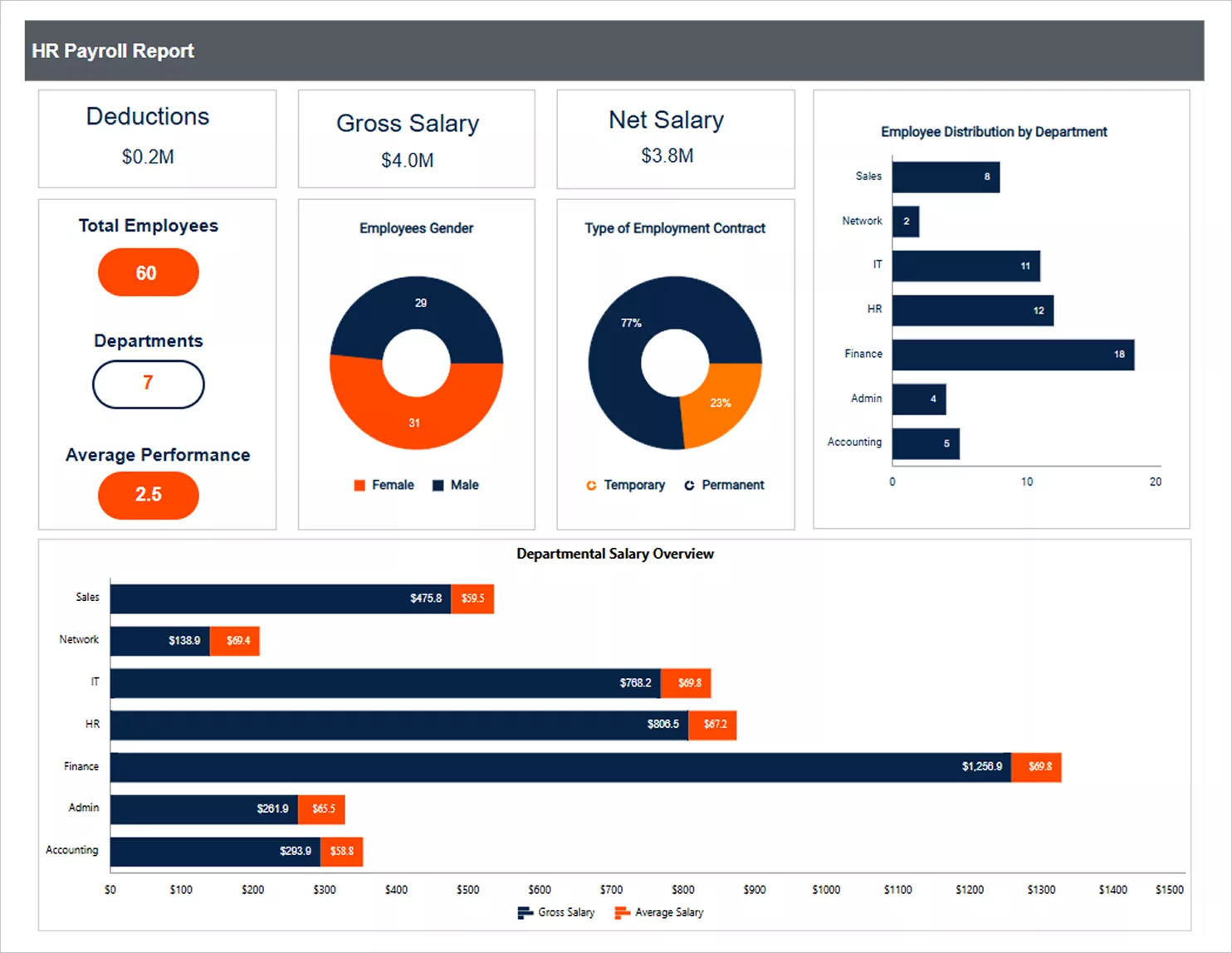
HR teams often struggle with fragmented data about employees and payroll, leading to delays in performance tracking and workforce planning. Consolidating HR data into real-time business reports, such as payroll and workforce reports, provides a clear view of employee distribution, salary trends, and headcounts across departments, enabling faster and more accurate decision-making. With business reporting, HR teams can:
-
- Combine payroll, attendance, and performance data into unified reports.
- Track key workforce metrics such as employee distribution, productivity, and retention.
- Generate consistent reports for payroll processing and workforce planning.
This approach reduces manual effort, improves data consistency, and enhances visibility into workforce performance.
2. Sales
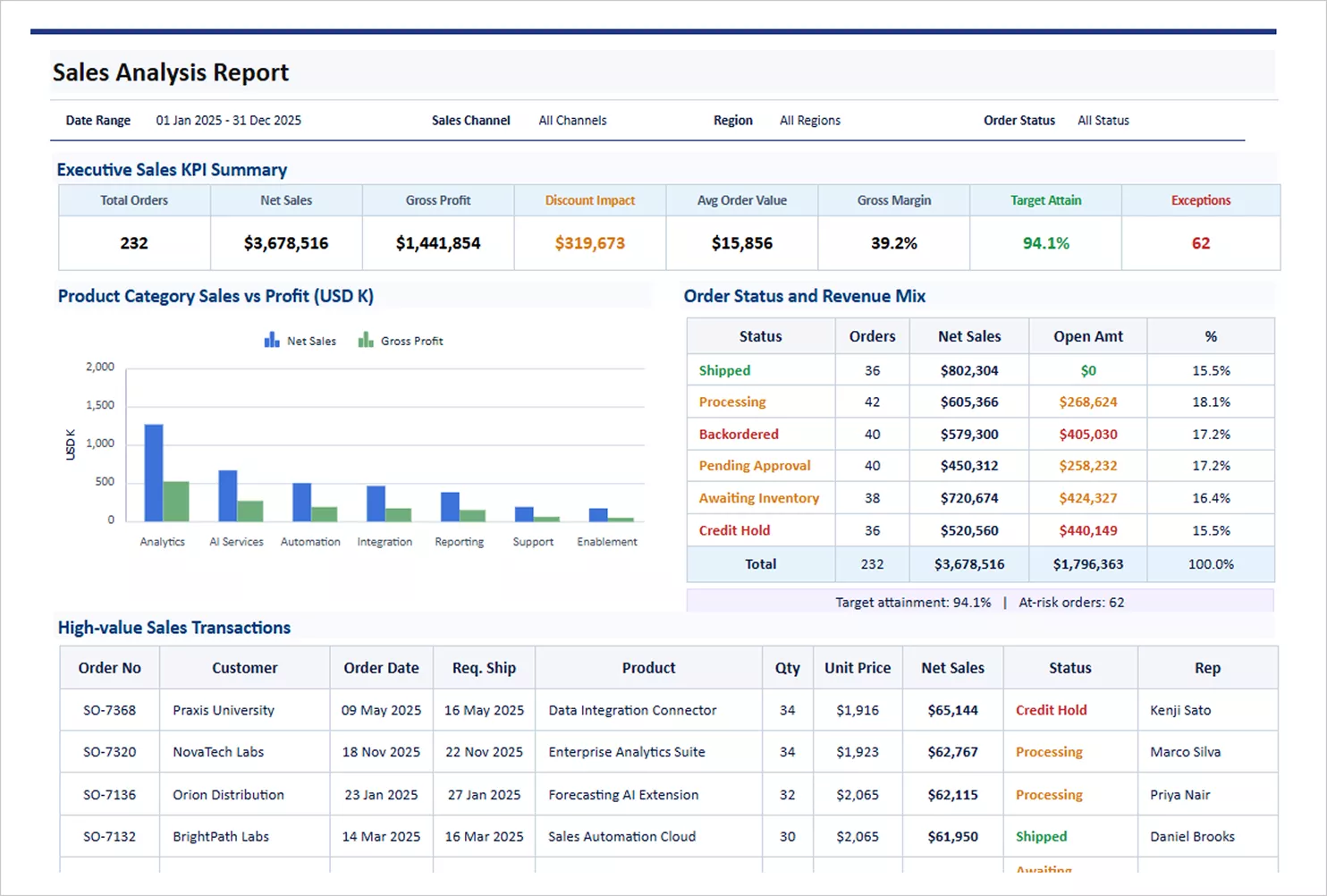
Sales teams need real-time visibility into sales performance, deal status, and revenue trends to effectively manage opportunities and meet targets. Structuring sales data into centralized reports provides a unified view of orders, product performance, and key revenue metrics across regions and time periods, enabling faster decisions, more accurate forecasting, and stronger pipeline cultivation.
With business reporting, sales teams can:
-
- Track pipeline performance and deal status in real time.
- Monitor key metrics such as net sales, gross profit, and average order value.
- Analyze product category performance and revenue contribution.
This approach enhances forecasting accuracy, streamlines sales analysis, and supports consistent, data-driven revenue growth.
3. Insurance
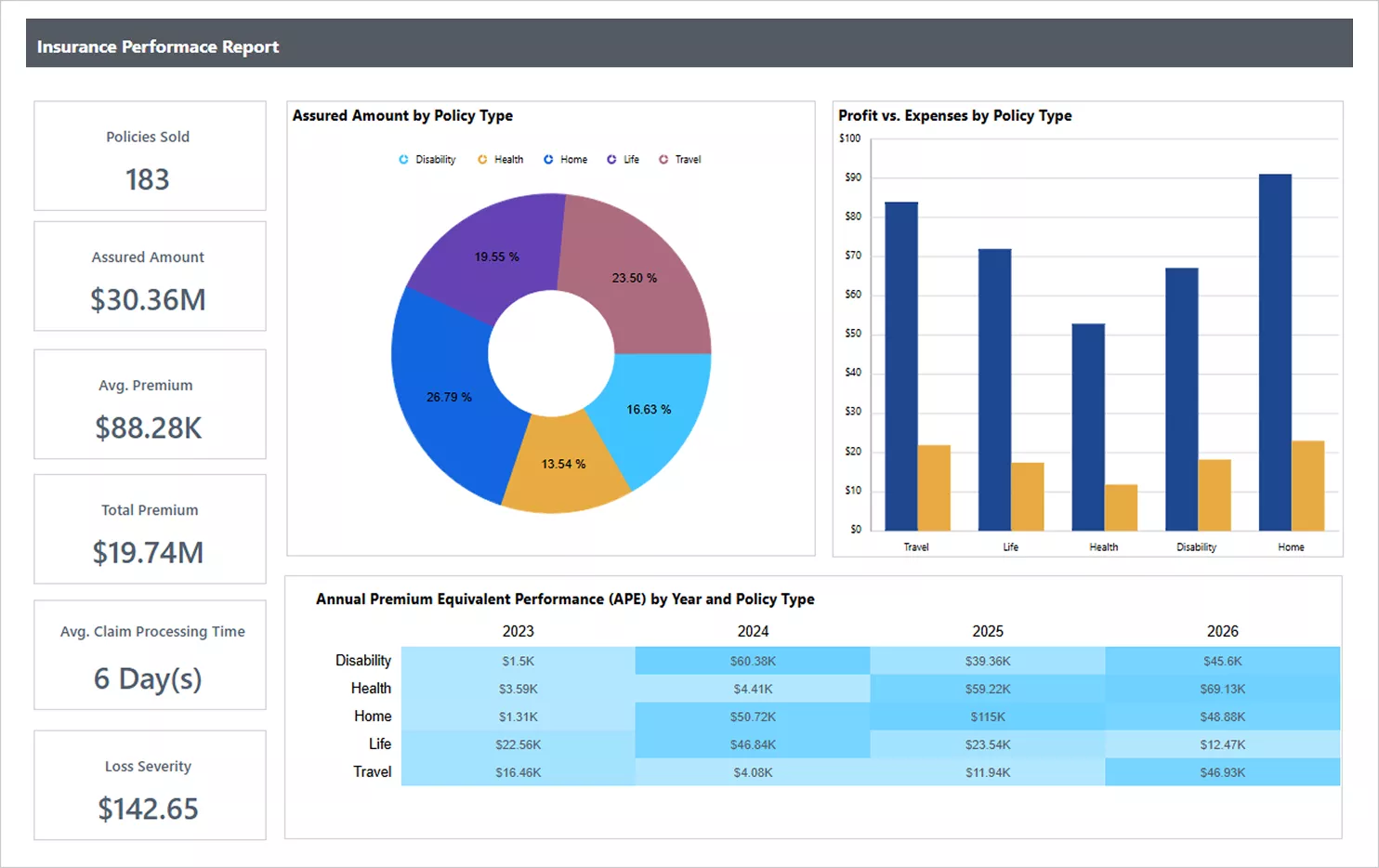
Insurance firms generate large volumes of data across policies, premiums, and claims, making it difficult to maintain clear visibility into performance and risk exposure. Business reporting organizes this data into real-time reports, providing an integrated view of policy distribution, premium trends, claim timelines, and profitability. This enables faster risk assessment, improved efficiency, and better decision-making.
With business reporting, insurance teams can:
-
- Monitor policy performance across categories such as health, life, and travel.
- Track premium metrics, including total and average premium trends.
- Analyze profitability by comparing profit and expenses.
- Measure claim efficiency using processing time and loss indicators.
By turning insurance data into actionable insights, organizations can strengthen risk management, improve operational efficiency, and ensure more consistent, compliant reporting.
4. Finance
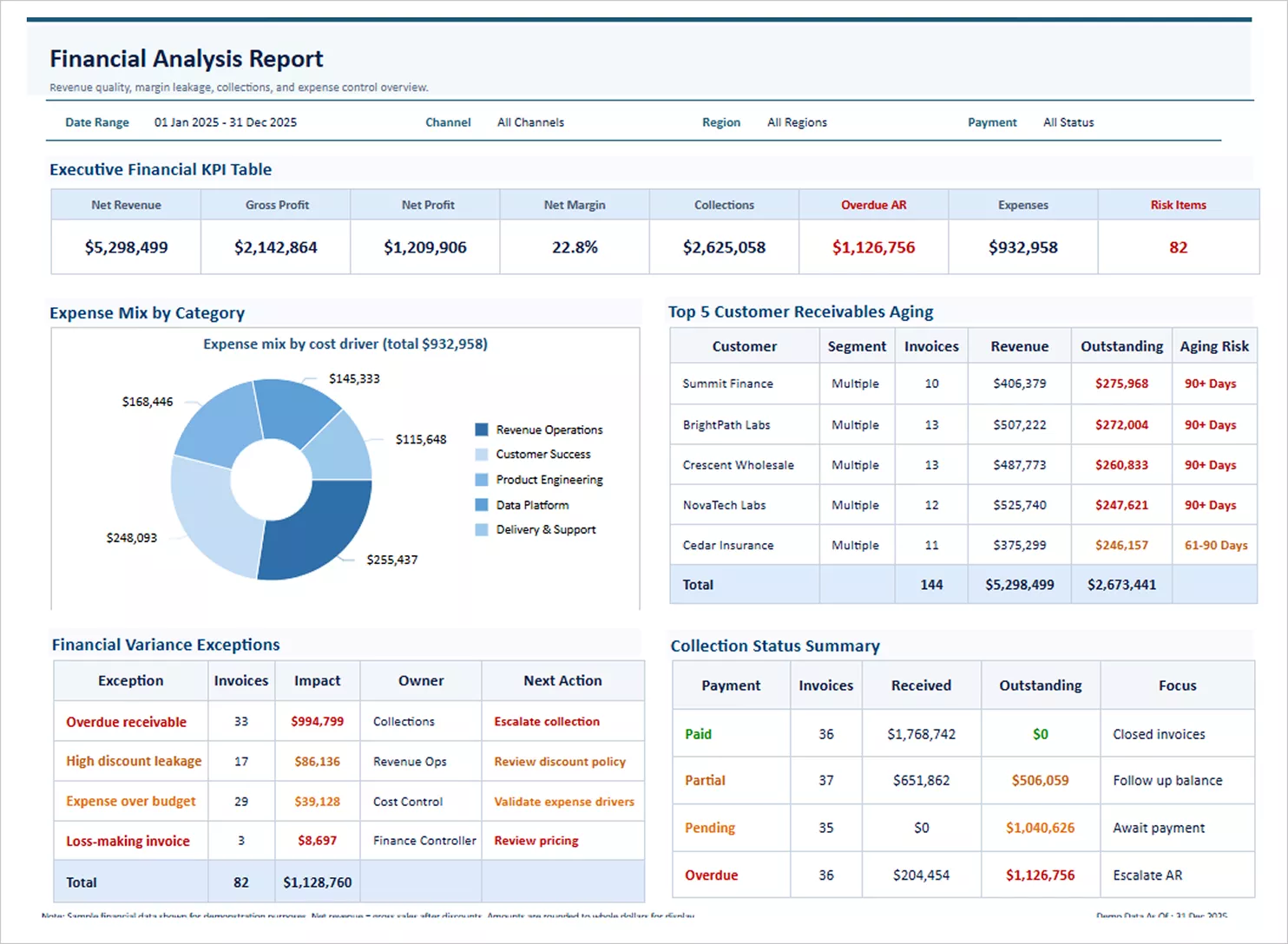
Finance teams rely on accurate insights into revenue, expenses, risks, and outstanding receivables to maintain financial control and support data-driven decision-making. Without structured reporting, tracking collections and identifying risks becomes inefficient and time-consuming. Consolidating financial data into a consistent view enables faster analysis, improves visibility, and strengthens financial oversight.
With business reporting, finance teams can:
-
- Monitor key financial metrics such as revenue, profit margins, and expenses.
- Track receivables aging and identify overdue accounts.
- Generate standardized reports for audits, compliance, and financial planning.
This approach improves cash flow visibility, enhances financial accuracy, and enables more effective, data-driven financial management.
How to choose the best business reporting tool for your enterprise
Choosing the right business reporting tool improves data visibility, automation, and decision-making, while the wrong choice can lead to inaccurate insights and inefficient workflows. To get the best results, evaluate reporting software based on functionality, scalability, and ease of use.
-
- Define your reporting needs: Clearly identify your business reporting requirements, such as financial, sales, or operational reporting, to ensure the tool aligns with your use cases. A poor fit can limit results and prevent you from meeting reporting goals.
- Evaluate data integration capabilities: Ensure the tool connects seamlessly with databases, CRMs, APIs, and cloud platforms to deliver centralized and accurate reporting. Poor integration can create data silos and inconsistent insights.
- Look for real-time reporting and automation: Choose software that offers real-time data access and automated reporting to reduce manual effort and avoid outdated information.
- Ensure ease of use: Select a tool with an intuitive interface and drag-and-drop functionality so both technical and non-technical users can create reports easily. Complex tools can reduce adoption and slow productivity.
- Verify security and compliance: Ensure strong security features such as role-based access, encryption, and compliance standards to protect sensitive business data and avoid potential risks.
- Consider customization and embedding: Choose a tool that supports customization and embedded reporting within applications for better flexibility and user experience. Limited customization can reduce usability and overall value.
Why choose Bold Reports for business reporting in 2026?
Bold Reports is a powerful business reporting software designed to help organizations automate reporting, gain real-time insights, and improve decision-making. It transforms traditional reporting by reducing manual effort, improving accuracy, and delivering scalable reporting solutions for modern businesses.
-
- Pixel-perfect reporting: Create professional, highly formatted reports that maintain a consistent layout across devices and platforms, ensuring accurate and reliable presentation.
- Purpose-built for business reporting: Support key use cases such as financial reporting, sales reporting, operational reporting, and compliance reporting with a solution designed for enterprise needs.
- Automated scheduling and delivery: Automate report generation and distribution to eliminate manual tasks, improve efficiency, and ensure timely access to insights.
- Flexible deployment options: Deploy to cloud, on-premises, or containerized environments like Docker and Kubernetes, providing complete control and scalability.
- Secure, role-based access: Protect sensitive business data with advanced security features, including role-based permissions and controlled access for different users.
Final thoughts
Effective business reporting is essential for turning complex data into clear, actionable insights that drive better decisions and business growth. By understanding report types, focusing on the right KPIs, and following a structured reporting approach, organizations can improve visibility, track performance, and respond quickly to change.
As data volumes grow, manual reporting becomes inefficient and harder to scale. Modern business reporting software addresses this by enabling automation, real-time data access, and consistent reporting across teams, helping reduce errors and save time.
To maximize the value of your data, Bold Reports simplifies reporting, automates workflows, and delivers accurate insights, helping organizations build a more efficient and scalable reporting process.
Ready to modernize your business reporting? Start your 30-day free trial or request a personalized demo to see how Bold Reports can streamline your reporting workflows and deliver real-time insights. If you have questions, contact us for expert support and guidance to optimize your reporting process and accelerate your setup.
Frequently asked questions
- 1.
What are business reports?
Business reports are structured documents that present data, insights, and analysis to help organizations track performance and make informed, data-driven decisions across departments.
- 2.
What makes Bold Reports the best reporting software for businesses?
Bold Reports offers pixel-perfect reports, automated workflows, and real-time data insights. Its advanced visualization, flexible deployment, and strong security features make it ideal for scalable enterprise reporting.
- 3.
How can I embed reports into business applications?
Reports can be embedded directly into applications by using APIs or SDKs provided by modern reporting tools.
- 4.
Is Bold Reports secure for sensitive business data?
Yes, Bold Reports includes enterprise-grade security features such as role-based access control, data encryption, and authentication integrations, ensuring sensitive data is protected.
- 5.
How do I choose the right business reporting tool?
Choose a tool that supports your reporting needs, integrates with data sources, offers automation, provides in-depth visualizations, ensures security, and supports scalability.
- 6.
What is the difference between business reporting and business intelligence?
Business reporting focuses on collecting, organizing, and presenting data through reports to track performance and support daily decision-making, while business intelligence uses advanced analytics, data modeling, and forecasting to deliver deeper insights and support long-term strategic planning.
- 7.
How does business reporting improve a business’s performance?
Business reporting helps track KPIs, identify inefficiencies, and optimize strategies, leading to improved productivity and better business outcomes.