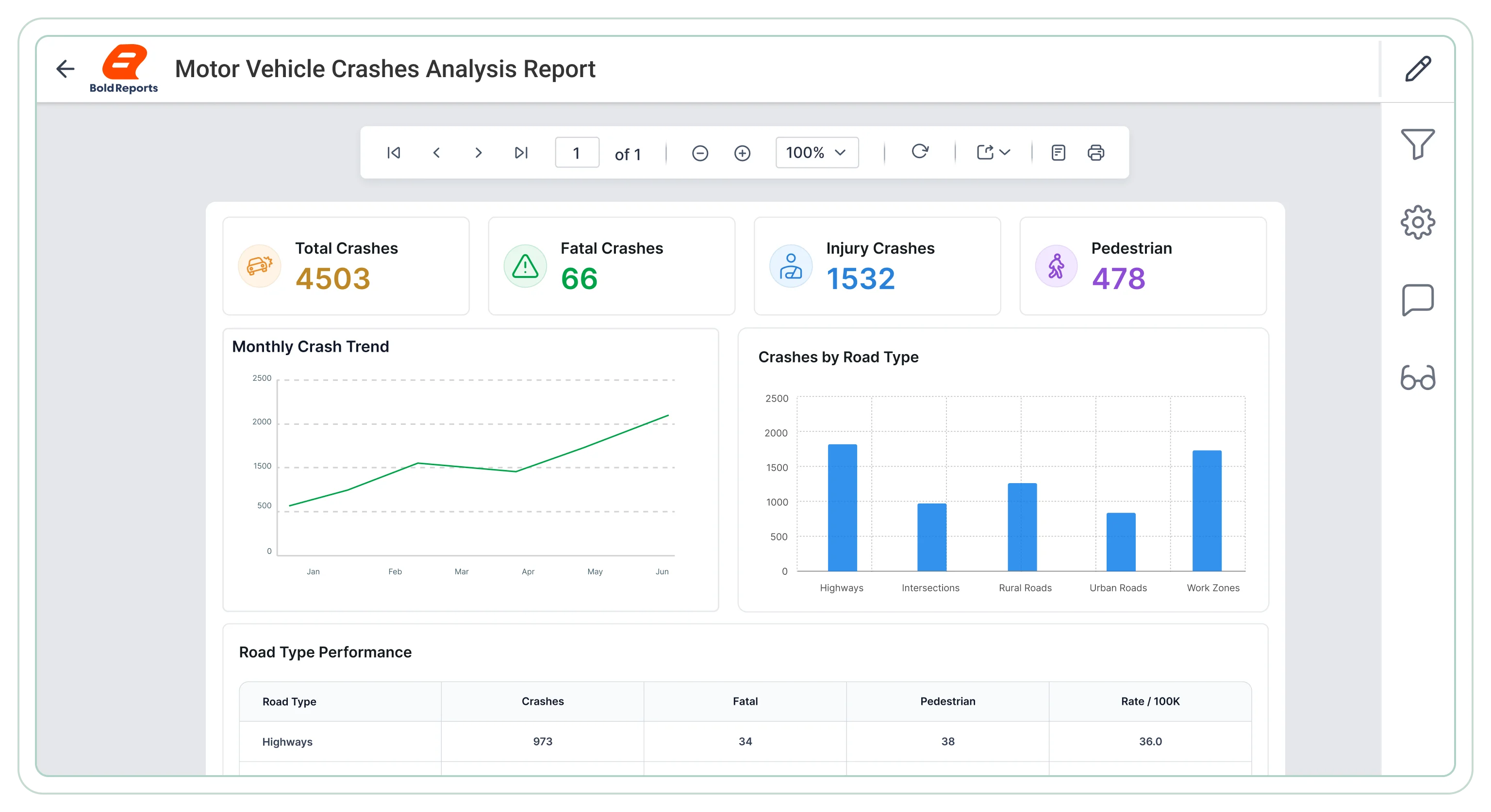








Crash trend assessment
A practical reporting view for teams tracking how accident volume changes across time and regions.
- Track accident counts by state and administrative regions.
- Analyze monthly crash trends to identify movement patterns.
- Detect high-volume reporting periods for incident spikes.
- Examine weekly distribution of accidents by time segments.
- Measure shifts in incident frequency over reporting periods.
Contributing factor review
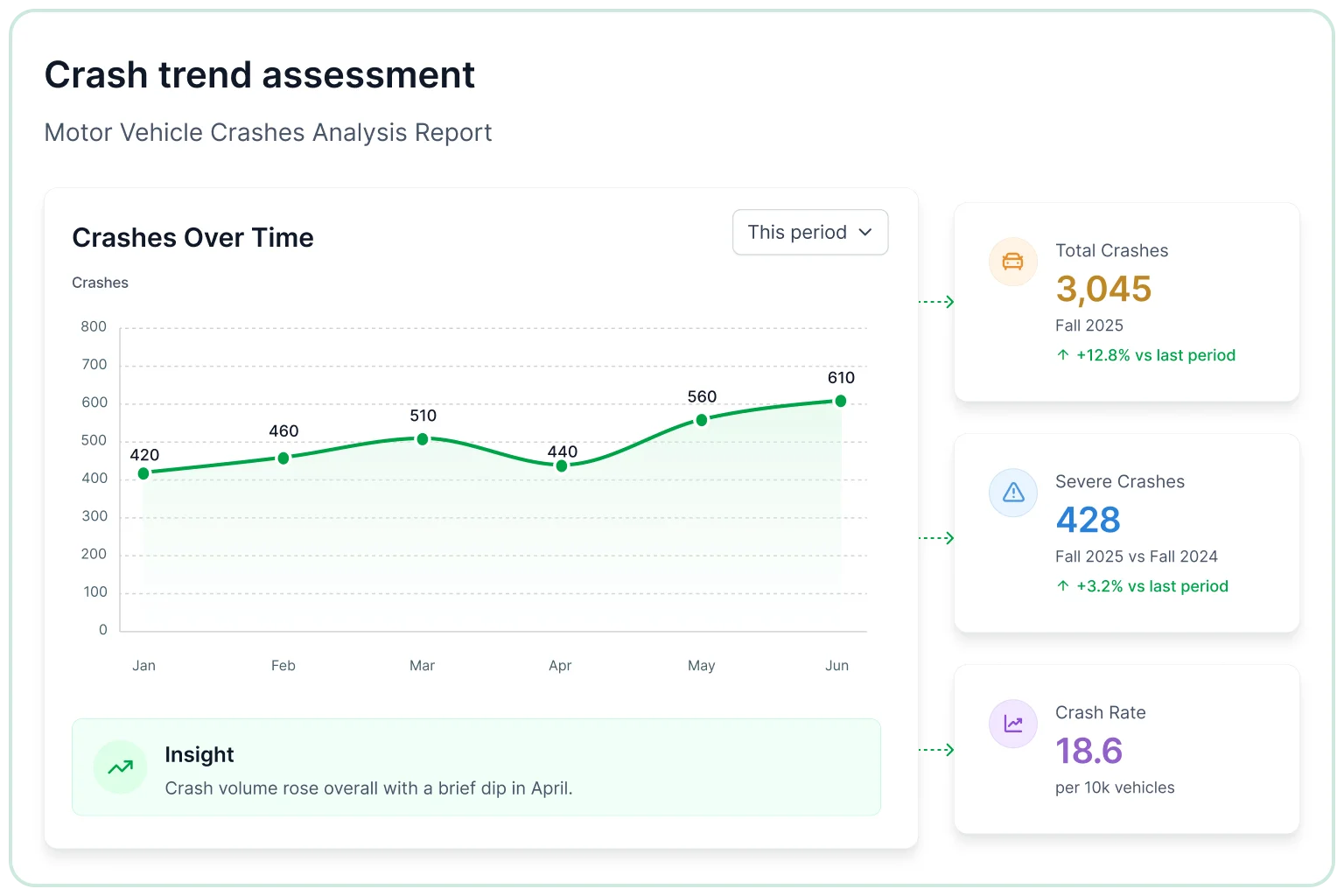
Helps agencies evaluate the conditions and behaviors most often linked to road incidents.
- Assess human-related causes contributing to accident occurrence.
- Examine environmental factor patterns affecting road safety.
- Identify trends linked to vehicle-related mechanical issues.
- Analyze cause distribution for defined reporting timelines.
- Measure factor concentration by geographic regions clearly.
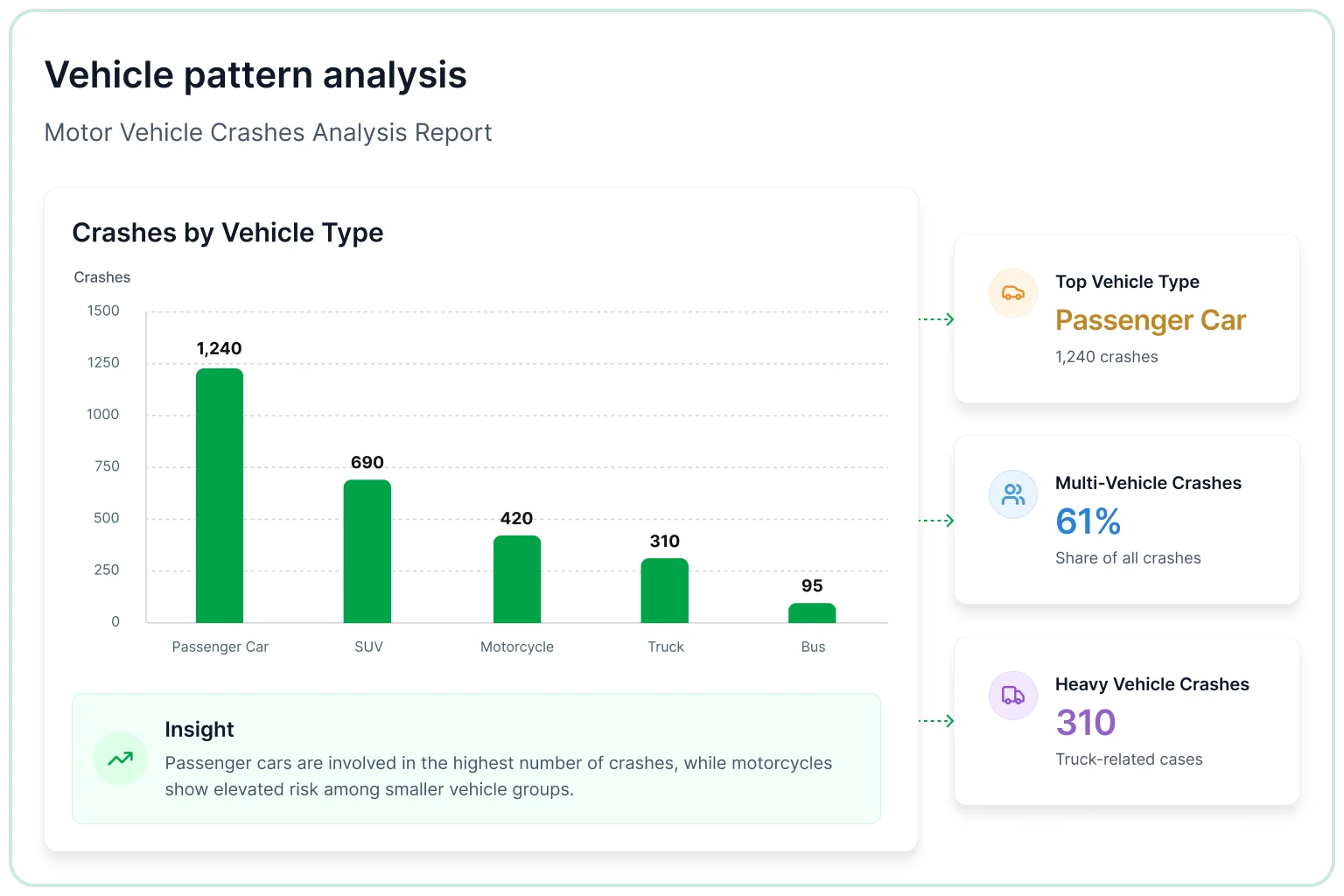
Vehicle pattern analysis
Useful for understanding how vehicle characteristics relate to crash occurrence.
- Review vehicle type involvement in crash incidents clearly.
- Analyze manufacturing year trends linked to crash records.
- Detect risk patterns associated with older vehicle groups.
- Examine fuel-type distribution in recorded crash cases.
- Measure crash volume contribution by vehicle category types.
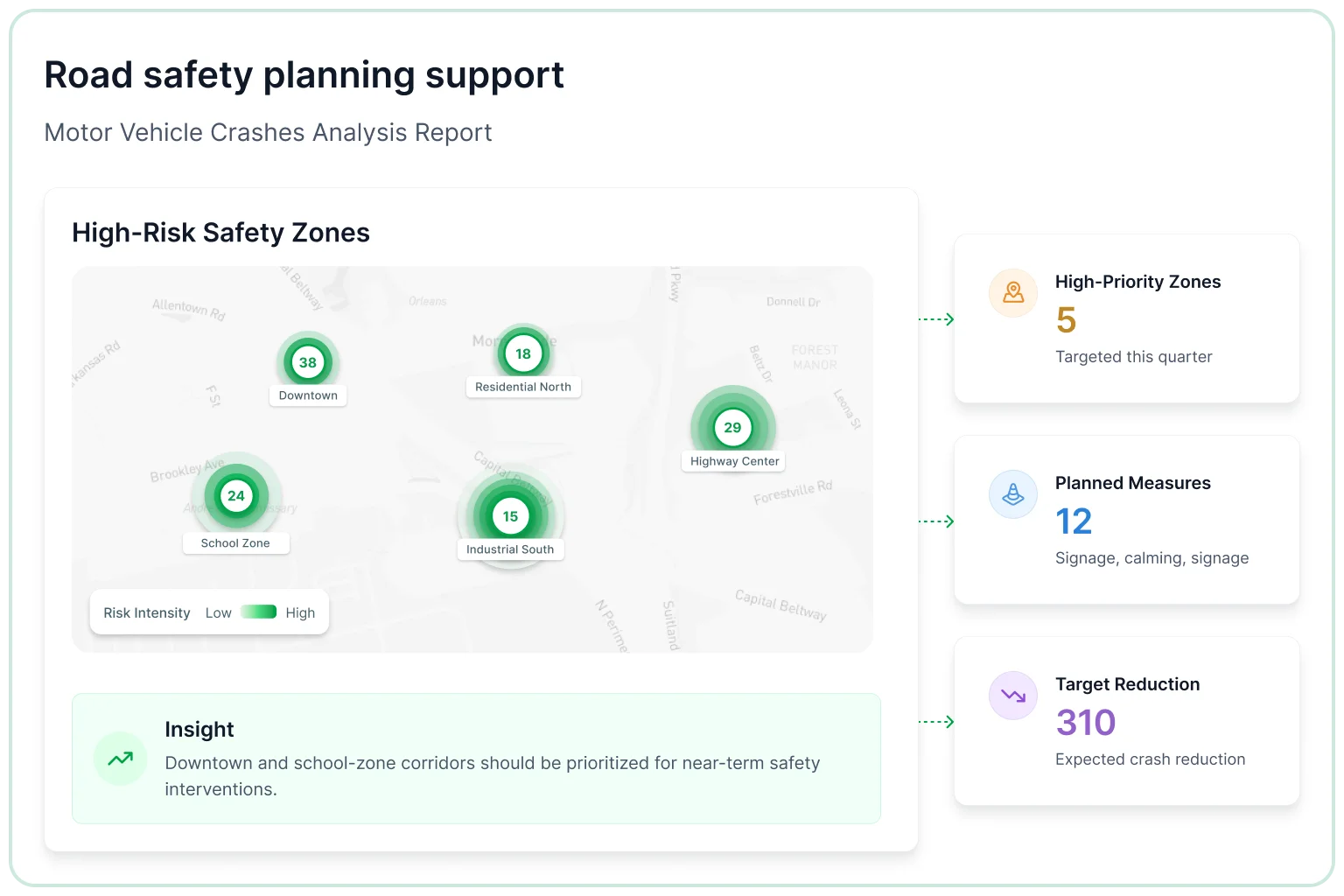
Road safety planning support
Supports policy and operational reviews with detailed records that guide targeted action.
- Analyze accident location patterns to identify risk zones.
- Examine incident distribution by day of the week clearly.
- Detect recurring high-risk areas requiring intervention focus.
- Review direction-based crash records for movement patterns.
- Measure planning priorities based on state-level trends.

Crash volume trend review
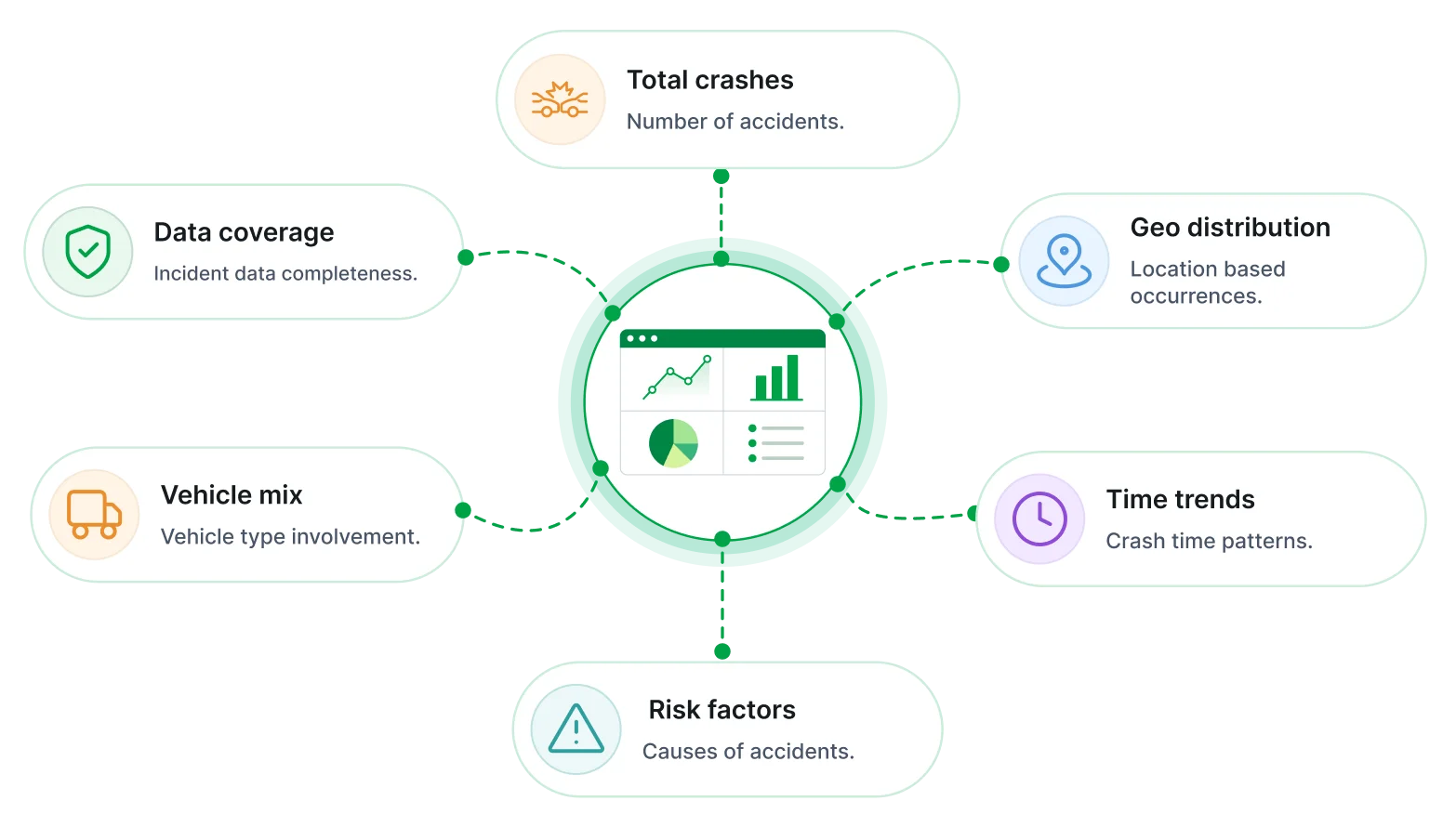
Tracks accident counts over time to evaluate traffic incident patterns.

Cause and risk factor review
Identifies speeding, weather, driver behavior, and other contributing factors.

Severity and casualty breakdown
Shows injury levels, fatalities, and damage severity across crash records.

Time and date pattern analysis
Analyzes crash timing by hour, day, season, and reporting period to identify key trends.

Location-based crash comparison
Compares crash frequency across roads, regions, intersections, or zones.

Safety planning support view
Helps agencies prioritize enforcement and road safety improvement efforts.


Integrated safety insights
Access accident data, contributing factors, and trends within a single reporting view.

Incident-level analysis capabilities
Analyze detailed crash records including vehicle type, travel direction, and contributing causes.

Controlled access to sensitive data
Ensure secure handling of accident records with controlled, role-based permissions across departments.

Risk and trend identification
Detect emerging safety risks across different regions and reporting time periods.

Scheduled reporting for monitoring
Generate scheduled reports to consistently track accident trends and monitor changes over time.

Cross-department collaboration
Share consistent safety insights with enforcement, planning, and policy teams across departments.
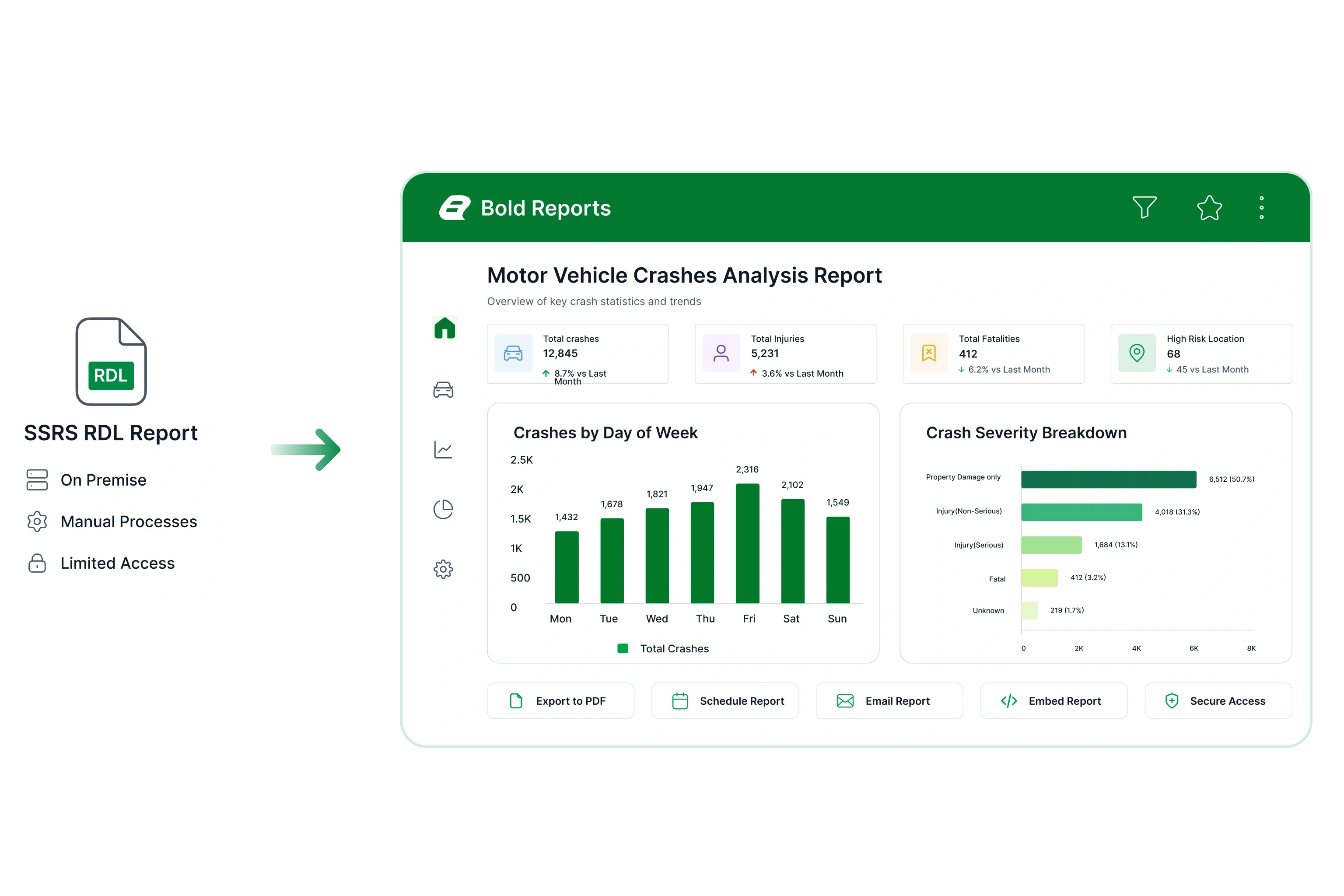

Filter by incident scope and severity.

Explore crash pattern details across regions.

Focus on safety KPIs and metrics.

Export ready reports for safety reporting.

Share secure reports with decision makers.