SSRS Migration Guide: What SQL Server 2025 Means for Teams
TL;DR:
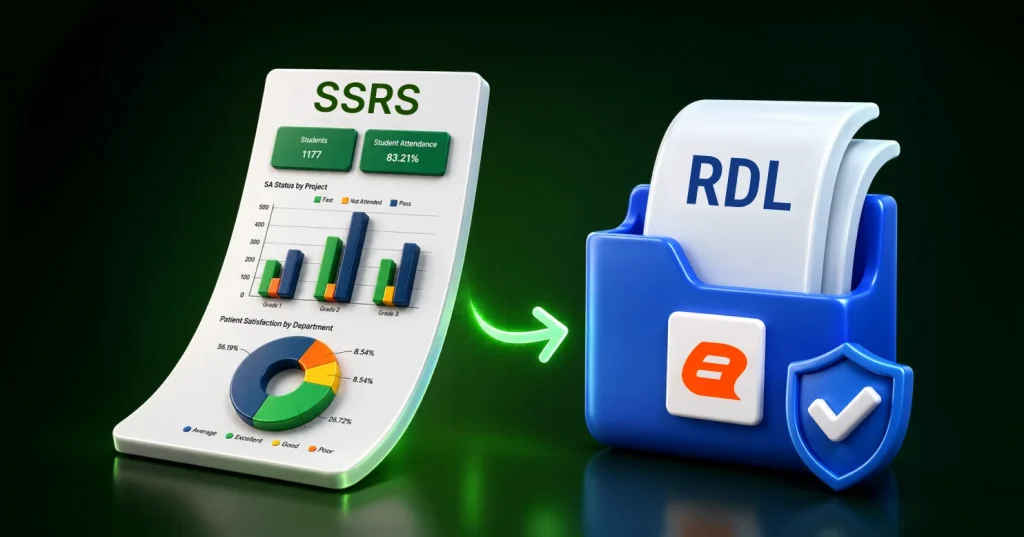
SQL Server 2025 keeps SSRS supported, but Microsoft’s reporting innovation has clearly shifted toward Power BI, Fabric, and cloud-first analytics. If your organization still depends on RDL reports, this is the right time to plan an SSRS migration strategy and move to Bold Reports; an RDL-compatible reporting platform.
Introduction
Your SSRS reports work today. They will work tomorrow. But five years from now, they may be the only part of your technology stack that hasn’t evolved. For years, SQL Server Reporting Services has been the dependable backbone of enterprise reporting. It has powered invoices, compliance reports, operational dashboards, financial statements, and thousands of internal reporting workflows.
For many teams, SSRS still works. That’s why migration is easy to delay. But the reporting world around SSRS has changed. Modern development teams now need reporting that can be embedded directly into web applications, scaled easily, customized through APIs, secured for multitenant environments, and deployed flexibly across cloud, on-premises, and hybrid architectures. SSRS was not designed for that world.
SQL Server 2025 reinforces a clear reality: SSRS may remain supported, but it is no longer where reporting innovation is happening. For teams still relying on SSRS, this is not an emergency deadline, but it is a strategic signal.
Now is the right time to plan a controlled SSRS migration strategy. Bold Reports is a practical path for teams that want to preserve existing RDL investments while modernizing the reporting experience.
What Microsoft’s direction really means for SSRS
The important point is this: SSRS is not disappearing overnight. But support and innovation are not the same thing.
Microsoft’s long-term reporting investment is centered on Power BI, Microsoft Fabric, and cloud-based analytics experiences. SSRS is no longer positioned as the center of Microsoft’s reporting future. It may remain stable, but it is unlikely to evolve meaningfully in areas modern teams care about most:
-
- Embedded reporting inside web and SaaS applications.
- Developer-first APIs and SDKs.
- Multitenant reporting architectures.
- Flexible deployment models.
- Modern authentication and integration patterns.
- Scalable reporting for customer-facing applications.
In plain terms, SSRS is becoming a maintenance platform. That does not make SSRS bad. It simply means it is no longer the best foundation for future reporting requirements.

The hidden SSRS problem: You probably have more reports than you think
Before choosing a migration path, every organization needs to understand the true size of its SSRS footprint.
Most teams underestimate their reporting environment. Reports are often scattered across production servers, development servers, archived folders, file shares, embedded application code, and old business unit projects. Some are actively used every day. Others are duplicated, abandoned, or owned by teams that no longer exist.
A successful SSRS migration starts with visibility. At minimum, your audit should identify:
-
- Active RDL reports.
- Report owners.
- Data sources and credentials.
- Shared datasets.
- Subreports and dependencies.
- Linked reports.
- Parameters and expressions.
- Subscriptions and delivery schedules.
- Export formats used by business teams.
- Reports embedded inside internal or customer-facing applications.
- Last-run date and usage frequency.
This audit often reveals three important truths. First, not every report needs to move. Some reports are obsolete and should be retired. Second, some reports are business-critical and need careful validation. Third, the migration is not just about RDL files. It is about preserving the reporting ecosystem around those files. That includes data access, security, dependencies, rendering behavior, exports, and user workflows. A migration is not a file copy. It is a dependency mapping exercise.
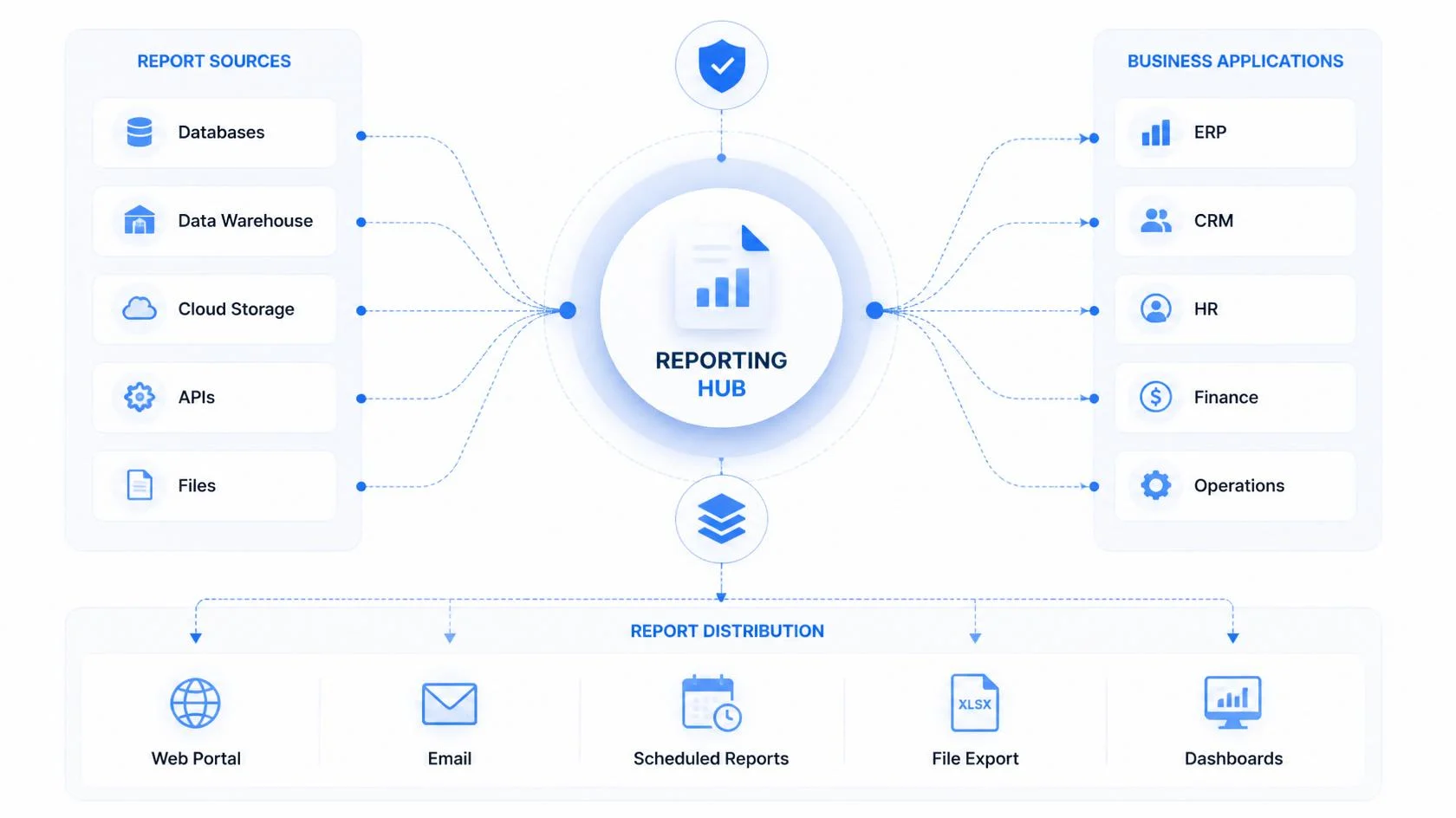
Why the Power BI Report Server is not the right answer for most application teams
When organizations start planning an SSRS migration, the Power BI Report Server is often considered as the first alternative. That makes sense. It is a Microsoft product, it supports paginated reports, and it appears to be the natural successor for some SSRS workloads.
But for many development teams, the Power BI Report Server does not solve the core problem. It keeps reporting tied to a server-centric model. Here is the practical comparison.
| Requirement | Power BI Report Server limitation | Why it matters |
| Application embedding | Often depends on iframe-style integration and additional configuration. | Reporting feels separate from the application experience. |
| Multitenant SaaS reporting | Complex to design and scale. | Customer-facing reporting becomes harder to manage. |
| Cost predictability | Enterprise licensing and infrastructure can become expensive as usage grows. | Scaling reporting may not align with product growth. |
| Modern development workflows | Still relies heavily on traditional report authoring models. | Teams remain tied to legacy reporting patterns. |
| Cloud-first innovation | Many newer Microsoft analytics features focus on Power BI Service and Fabric. | Capability gaps may widen over time. |
The Power BI Report Server may be useful for organizations that want to stay close to the Microsoft ecosystem and maintain on-premises paginated reporting. But if your goal is to embed reporting inside applications, it is often not enough.
The question is not, “What is the closest Microsoft replacement for SSRS?” The better question is, “What platform lets us preserve our RDL investment while supporting modern embedded reporting?”
That is where Bold Reports becomes a stronger fit.
The 5 requirements of an SSRS replacement
A modern SSRS replacement must do more than render paginated reports. It must support how software teams build and deliver reporting today. Here are the five requirements that matter most.
1. Native RDL support
Existing SSRS reports represent years of business logic, formatting, expressions, and layout decisions. Rebuilding them from scratch is expensive, risky, and unnecessary. A practical SSRS replacement should allow teams to reuse existing RDL reports with minimal rework. Native RDL support reduces migration effort and protects prior reporting investments.
2. Embedded reporting capabilities
Modern users do not want to leave an application to access reports. Reports should appear inside the application, no matter with which framework the app was built. Embedding should feel native, customizable, and secure, not like a separate portal loaded inside an iframe.
3. Scalable performance
Reporting workloads can grow quickly. A platform should support large datasets, concurrent users, exports, scheduled reports, and interactive report viewing without requiring constant, manual tuning.
This is especially important for SaaS products and enterprise applications where reporting demand increases with user adoption.
4. Multi-tenant security
Many modern applications serve multiple customers, departments, or business units. A reporting platform must support the secure isolation of users, tenants, roles, and datasets. Access control should be flexible enough to match the application’s own security model.
5. Developer control
Development teams need APIs, SDKs, customization options, and automation capabilities. Reporting should fit into the application’s architecture and not force the application to work around the reporting server.
A modern SSRS replacement should give developers control over report rendering, parameters, authentication, exports, and integration workflows.
Why Bold Reports is a practical replacement for SSRS
Bold Reports is built for organizations that need to move beyond SSRS without abandoning their existing report investments.
1. Preserves existing RDL investments
One of the biggest concerns in any SSRS migration is the possibility of having to rebuild hundreds of reports from scratch. Bold Reports helps reduce that risk with native RDL support. Teams can migrate existing SSRS reports while preserving:
-
- Report layouts
- Parameters
- Expressions
- Tables and matrices
- Charts
- Subreports
- Business logic
- Export behavior
Most organizations want continuity first, modernization second. Bold Reports allows teams to keep what already works and improve the surrounding reporting experience.
2. Built for embedded reporting
SSRS was designed around a report server model. Bold Reports is designed for modern application integration. Reports can be embedded directly into applications built with:
-
- Blazor
- React
- Angular
- JavaScript
- NET Core
- NET MVC
This allows reporting to become part of the user workflow rather than a separate destination. For product teams, this is a major advantage. Reports can match the application’s look and feel, follow the same authentication flow, and behave like a native feature of the product.
3. Supports developer integration
Modern development teams need flexibility. Bold Reports provides APIs and SDKs that allow teams to control reporting behavior programmatically. Developers can manage report rendering, parameters, data access, exports, and viewer customization as part of the application experience.
This is important for teams building custom business workflows. Instead of forcing users into a separate reporting portal, developers can deliver reporting exactly where users need it.
4. Supports scalable, multitenant reporting
For SaaS products and enterprise applications, multitenant reporting is often one of the hardest problems to solve with legacy tools.
Bold Reports supports secure reporting scenarios where access must be isolated by tenant, customer, department, role, or user. Developers can deliver reporting to multiple audiences without duplicating infrastructure or creating complex SSRS workarounds.
5. Continues to evolve
SSRS is stable, but its innovation cycle is limited. Bold Reports continues to evolve alongside modern application frameworks and reporting needs. That matters because reporting requirements do not stand still. As applications become more embedded, interactive, scalable, and API-driven, reporting platforms must keep pace.
What carries over and what you should validate
An SSRS-to-Bold Reports migration is not about starting again. It is about moving existing reports into a modern environment while validating the parts that matter. Here is what typically carries over.
| Area | What carries over | What to validate |
| RDL reports | Layouts, parameters, expressions, report logic. | Rendering accuracy and formatting. |
| Report structure | Subreports, datasets, resources. | Dependency loading and report relationships. |
| Data connections | Queries and source logic. | Credentials, authentication, and connection handling. |
| Security | Role and access concepts. | Mapping to application-level permissions. |
| Delivery experience | Viewer-based report access and exports. | Web, PDF, Excel, and other output formats. |
| Embedded usage | Reports inside applications. | Viewer behavior, parameters, and performance. |
The goal is to make reports run reliably inside the architecture your team uses today. That is what separates a true modernization effort from a simple server replacement.
The 3 migration risks every team should plan for
SSRS migrations are rarely blocked by the report files themselves. Most issues come from missing dependencies, unclear ownership, or incomplete validation. Here are the three risks to plan for early.
1. Missing dependencies
Reports often rely on shared datasets, subreports, images, external resources, and linked report structures. If those dependencies are not identified before migration, reports may render incorrectly or fail after cutover. The fix is simple but important: build a complete report inventory before moving anything.
2. Security gaps
SSRS permissions do not always map cleanly into modern, application-level access controls. A report that was previously secured by folder permissions, roles, or server-level access may need to be redefined within the application’s authentication and authorization model. Security should be validated with real users, not just admin accounts.
3. Rendering and export differences
Reports may look correct in the browser but behave differently when exported to PDF, Excel, Word, or CSV. This is especially important for finance, compliance, and operational reports where layout precision matters. Every critical report should be validated across the formats users actually rely on.
The good news: these risks are predictable. With the right audit and validation process, SSRS migration becomes controlled, phased, and manageable.
How to start an SSRS migration without overcommitting
You do not need to begin with a full migration project. Start with a focused assessment.
In the next seven days, your team can make meaningful progress by doing five things:
- Export a full inventory of reports from your SSRS environment.
- Identify the top 20 most-used reports.
- Mark which reports are embedded inside applications.
- Document key dependencies such as data sources, subreports, and subscriptions.
- Test one representative RDL report in Bold Reports to understand the effort needed for migration.
This small pilot gives your team evidence. You will know how much of your report collection can move easily, where the risks are, and which reports require deeper validation. That is far better than waiting until SSRS becomes a business constraint.
Final thoughts
SSRS has served organizations well for years, but the reporting needs of modern teams have changed. SSRS was not built for the future, and SQL Server 2025 is not a reason to panic; it is a reason to plan.
For teams with existing RDL reports, Bold Reports provides a practical migration path: preserve what works, modernize what is limiting you, and bring reporting directly into your applications. Your RDL files are an asset, and Bold Reports helps you carry them forward.
Ready to see how your SSRS reports can work in a modern embedded environment? Request a Bold Reports migration walkthrough and test your existing RDL reports with minimal friction.
Frequently asked questions
-
- 1.
Is SSRS going away in SQL Server 2025?
No, SSRS remains supported.
- 2.
Can existing SSRS reports be reused in Bold Reports?
Yes. Bold Reports supports RDL reports, allowing many existing SSRS reports to be reused. Teams should still validate rendering, parameters, data sources, and exports during migration.
- 3.
Is Bold Reports a full replacement for SSRS?
Yes, Bold Reports serves the same core purpose as SSRS for paginated business reporting while adding modern capabilities.
- 4.
How long does SSRS migration usually take?
Migration time depends on report volume, complexity, dependencies, and validation requirements. A focused pilot can often be completed quickly, while large enterprise environments should migrate in phases.
- 5.
What is the biggest risk in SSRS migration?
The biggest risk is incomplete visibility. Missing dependencies, unclear permissions, unused reports, and unvalidated exports usually create more problems than the RDL migration itself.
- 6.
What should I audit before starting an SSRS migration?
Start by inventorying your RDL reports, shared datasets, data sources, subreports, user permissions, subscriptions, and embedded reporting integrations. Understanding these dependencies early helps reduce migration risk and avoid unexpected redevelopment work.
- 7.
Why choose Bold Reports instead of the Power BI Report Server?
The Power BI Report Server can support traditional paginated reporting, but many organizations need capabilities beyond report hosting. Bold Reports combines native RDL compatibility with embedded reporting, developer-focused APIs, modern security models, and multitenant support, making it a practical option for organizations modernizing reporting.
- 1.