Best Crystal Reports Alternatives for .NET and C# Teams
TL;DR
Looking for a Crystal Reports alternative for your .NET or C# application? Compare the top Crystal Reports replacements based on reporting capabilities, deployment flexibility, and integration options. Find the best enterprise reporting solution to modernize your reporting infrastructure, streamline report management, and support long-term business growth.
Introduction
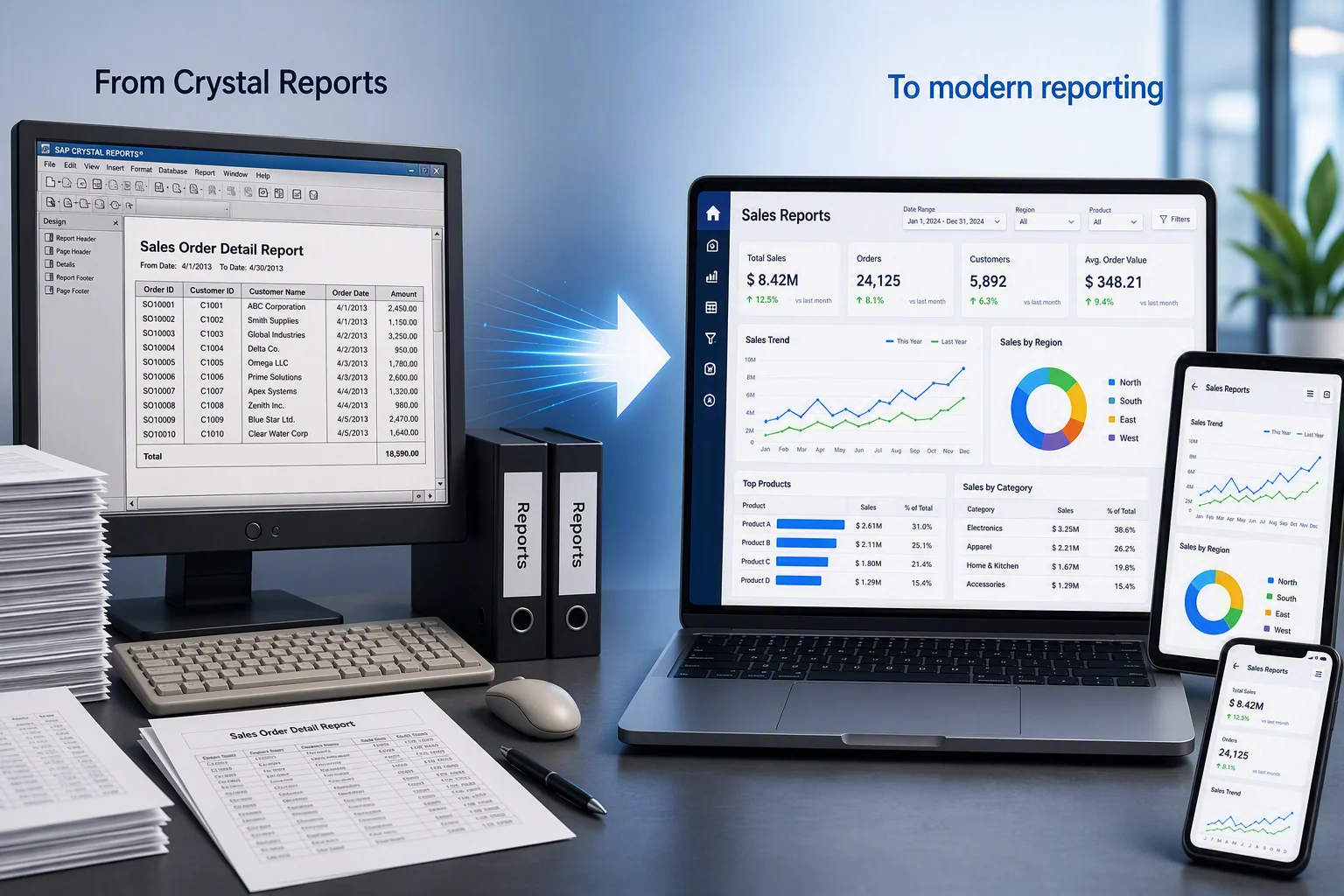
Many organizations using Crystal Reports are now evaluating alternatives to support .NET applications, improve scalability, and simplify report management. While Crystal Reports remains a widely used reporting tool, development teams often face challenges with legacy architecture, limited web accessibility, complex maintenance, and the growing demand for embedded reporting capabilities.
The need to evaluate a Crystal Reports replacement has become increasingly urgent following SAP’s discontinuation of the 32-bit Crystal Reports .NET runtime in December 2025 and the upcoming end of mainstream maintenance for Crystal Reports 2020 on December 31, 2026. These milestones are prompting organizations to migrate from legacy reporting environments and adopt modern .NET reporting tools that offer long-term support, improved performance, and greater deployment flexibility
Modern .NET reporting tools provide browser-based access, embedded reporting, and flexible deployment options helping organizations deliver better reporting experiences while reducing maintenance overhead. These capabilities are especially important for enterprises building customer-facing applications and internal reporting systems using .NET and C#.
In this guide, we’ll compare the best Crystal Reports alternatives for .NET and C# teams, evaluate their key features, strengths, and limitations, and help you choose the right enterprise reporting solution to support your reporting modernization goals.
Why are organizations looking for a Crystal Reports alternative?
Organizations are actively reviewing their reporting strategy as SAP lists the end of mainstream maintenance for Crystal Reports 2020 on December 31, 2026. This milestone is prompting many businesses to evaluate future-ready reporting platforms that offer ongoing innovation, modern architecture, and long-term support. Reasons for migrating include:
-
- Legacy architecture: Crystal Reports was originally designed for traditional desktop and client-server environments. Modern organizations require reporting solutions that can seamlessly support web applications, cloud platforms, and distributed architectures.
- Increasing maintenance complexity: Maintaining legacy reporting systems can become time-consuming and costly. Organizations often need specialized expertise to modify reports, troubleshoot issues, and manage report deployments, increasing the overall cost of ownership.
- Demand for web-based reporting: Users increasingly expect reports to be accessible from anywhere through a web browser. Many businesses are adopting web-based reporting tools that provide centralized access, easier collaboration, and improved user experiences.
- Need for embedded reporting: Software vendors and enterprises want to deliver reporting directly within their applications. Modern .NET reporting tools provide embedded reporting capabilities that allow organizations to integrate reports seamlessly into customer-facing and internal applications.
- Scalability requirements: As organizations grow, reporting platforms must handle larger datasets, more users, and higher reporting workloads. Many teams seek a Crystal Reports replacement that offers enterprise-grade scalability, high performance, and the flexibility to support future business growth.
What to look for in a Crystal Reports alternative
When evaluating Crystal Reports alternatives, choose a solution that supports both your current reporting needs and future growth. The wrong platform can create scalability challenges, performance issues, and costly migration and maintenance efforts over time. Be sure to look for:
-
- Web-based reporting capabilities: The solution should provide browser-based report viewing and management. Tools with limited web capabilities can restrict accessibility and increase administrative overhead.
- Native .NET integration: The platform must seamlessly support ASP.NET, ASP.NET Core, Blazor, and MVC applications to reduce development complexity and accelerate implementation.
- Embedded reporting options: Modern reporting platforms should integrate seamlessly into .NET and C# applications. Without embedded reporting, organizations may face additional development efforts and fragmented user experience.
- Scalability and performance: The platform must handle large datasets, concurrent users, and growing reporting demands. Poor scalability can lead to slow report execution and future migration challenges.
- Flexible deployment options: The tool should support on-premises, cloud, and hybrid environments to ensure the platform can adapt to changing business needs. Limited deployment options can restrict future growth.
- Self-service reporting: Business users should be able to create and customize reports independently. Without self-service capabilities, reporting requests can quickly become a bottleneck for IT and development teams.
- Enterprise-grade security: Features like role-based access control, authentication integration, and auditing help protect sensitive data and support compliance requirements. Weak security can expose organizations to significant risk.
Top 6 Crystal Reports alternatives for .NET and C# teams
1. Bold Reports®
Bold Reports is a modern enterprise reporting solution for .NET and C# applications. It combines pixel-perfect reporting, embedded reporting, and flexible deployment options in a single platform, making it ideal for SaaS applications and business reporting needs.
As a leading Crystal Reports alternative, Bold Reports helps organizations modernize legacy reporting environments with a scalable web-based reporting platform. Its powerful embedding capabilities and self-service report design tools enable developers and business users to easily create, manage, and access reports across web, mobile, and business applications.
Best for
-
- Organizations migrating from Crystal Reports and legacy reporting tools.
- .NET and C# applications requiring embedded reporting.
- Enterprises seeking scalable, web-based reporting.
- Multitenant reporting platform needs.
- SaaS applications.
Key strengths
-
- Native support for ASP.NET, ASP.NET Core, Blazor, and MVC applications.
- Embedded reporting with white-label capabilities.
- Web-based report designer and report management portal.
- Self-service and pixel-perfect reporting.
- Automated report scheduling and distribution.
- Deployment flexibility across on-premises, cloud, and hybrid environments.
- Enterprise-grade security, governance, and scalability.
- Designed to simplify migration from legacy reporting platforms.
Considerations
-
- Focused primarily on operational and paginated reporting rather than advanced BI dashboards and AI-driven analytics. Organizations seeking a dedicated business intelligence platform may require an additional analytics solution.

Ready to replace Crystal Reports? Book a demo to see how Bold Reports can modernize legacy reporting environments with embedded reporting, web-based report management, and native .NET support.
2. SQL Server Reporting Services (SSRS)
SQL Server Reporting Services is Microsoft’s enterprise reporting platform for creating, managing, and delivering paginated reports. Widely used across the Microsoft ecosystem, SSRS is a reliable solution for organizations that need operational reporting, scheduled report delivery, and SQL Server integration.
Best for
-
- Organizations already invested in the Microsoft ecosystem.
- SQL Server-based reporting environments.
- Operational and enterprise reporting workloads.
Key strengths
-
- Seamless SQL Server integration.
- Mature reporting capabilities.
- Strong report scheduling and subscriptions.
- Familiar environment for Microsoft users.
- Paginated and pixel-perfect reports.
Considerations
-
- Limited embedded reporting capabilities compared to newer platforms.
- Traditional architecture may not align with modern application requirements.
3. Microsoft Power BI Paginated Reports
Microsoft Power BI Paginated Reports are pixel-perfect, print-ready reports designed for invoices, financial reports, and regulatory documents. Unlike standard Power BI dashboards, they can span multiple pages, display complete datasets, and offer precise control over layout, formatting, headers, footers, and page breaks.
For organizations already using the Microsoft ecosystem, paginated reports integrate seamlessly with Power BI data sources and services, enabling consistent and efficient reporting.
Best for
-
- Microsoft ecosystem users.
- Financial and regulatory reporting.
- Organizations that require pixel-perfect reports.
- Large-scale operational reporting.
- Invoices and billing documents.
Key strengths
-
- Pixel-perfect report formatting.
- Rich PDF, Excel, Word, and PowerPoint exports.
- SSRS-compatible RDL reporting.
- Broad enterprise data source connectivity.
- Native integration with the Power BI ecosystem.
Considerations
-
- Power BI Paginated Reports are designed for static, document-style reporting and lack advanced interactive capabilities such as AI insights and dashboard-style analytics.
4. Telerik Reporting
Telerik Reporting is a .NET reporting solution that enables developers to create, manage, and embed interactive reports in web and desktop applications. Its extensive framework support and seamless integration with the Telerik ecosystem make it a compelling choice for organizations already using Telerik products.
Best for
-
- Organizations already using Telerik UI components and the Progress ecosystem.
- .NET development teams requiring embedded reporting capabilities.
- Organizations seeking flexible report design, distribution, and customization options.
- Teams using ASP.NET Core, Blazor, Angular, or React applications.
Key strengths
-
- Comprehensive embedded reporting for web and desktop applications.
- Strong integration with .NET applications.
- Extensive export capabilities including PDF, Excel, and Word.
- Multiple WYSIWYG report designers for both developers and business users.
Considerations
-
- Limited rich text and HTML content formatting options in the HtmlTextBox item (only text formatting is available).
5. JasperReports
JasperReports is an open-source reporting platform widely used in embedded reporting applications to create pixel-perfect reports and generate documents. Backed by TIBCO’s commercial offering, JasperReports provides developers with extensive customization capabilities and support for multiple data sources, making it a popular choice for organizations seeking a flexible reporting framework.
Best for
-
- Businesses seeking an open-source reporting solution.
- Organizations building Java-based applications.
- Teams that need flexible deployment options across web, desktop, and cloud environments.
- Organizations that require both reporting and data visualization capabilities.
Key strengths
-
- Pixel-perfect report generation.
- Extensive data source connectivity.
- Strong report scheduling and distribution capabilities.
- Embedded reporting for web applications.
Considerations
-
- Performance can be affected when working with large datasets or complex reports.
6. Stimulsoft Reports
Stimulsoft Reports is a reporting and dashboard platform that enables organizations to create, manage, and distribute reports and dashboards across web, desktop, and cloud environments. By combining reporting, dashboards, and data analytics capabilities in a single solution, Stimulsoft appeals to organizations seeking flexibility across multiple technologies and deployment environments.
Best for
-
- Organizations needing both reporting and dashboard capabilities.
- Cross-platform reporting environments.
- Teams seeking flexible deployment options across web, desktop, and cloud applications.
- SaaS providers looking for white-label reporting solutions.
Key strengths
-
- Integrated reporting and dashboard functionality in a single platform.
- Interactive data visualizations and analytics capabilities.
- Cross-platform support for web, desktop, and cloud applications.
- Wide range of export formats, including PDF, Excel, and Word.
- Flexible deployment options to support different business requirements.
Considerations
-
- The extensive feature set can create a steeper learning curve for new users.
- Organizations with highly customized reporting requirements may need additional setup and maintenance effort.
Top Crystal Reports alternatives in 2026: A side-by-side comparison
| Tool | Report design | Embedded reporting | Deployment flexibility | Export & distribution | ASP.NET Core support | Pixel-perfect reporting | Web-based report designer | Dashboards & AI analytics |
| Bold Reports | Strong | Excellent | Excellent | Excellent | Excellent | Excellent | Excellent | Limited |
| SSRS | Excellent | Moderate | Moderate | Excellent | Strong | Excellent | Excellent | Limited |
| Telerik Reporting | Strong | Strong | Strong | Strong | Strong | Excellent | Strong | Moderate |
| Power BI Paginated Reports | Excellent | Limited | Moderate | Strong | Limited | Excellent | Limited | Limited |
| JasperReports | Strong | Strong | Strong | Strong | Limited | Excellent | Moderate | Strong |
| Stimulsoft Reports | Strong | Strong | Strong | Strong | Strong | Excellent | Strong | Strong |
Best Crystal Reports alternatives by use case
Choosing the right Crystal Reports alternative depends on your reporting requirements, deployment strategy, and long-term scalability goals. Different reporting platforms excel in different scenarios, so it’s important to align your choice with your organization’s primary use case.
-
- Modern .NET and C# applications: Bold Reports and Telerik Reporting are strong options for organizations that need embedded reporting, web-based report management, API integration, and flexible deployment. These capabilities are essential for building scalable internal and customer-facing applications.
- Microsoft-focused environments: Power BI Paginated Reports and SSRS are well-suited for teams already invested in the Microsoft ecosystem. They work best for organizations using SQL Server, Power BI, and other Microsoft technologies for operational reporting and data distribution.
- Highly customized reporting requirements: JasperReports and Bold Reports are strong options for teams that need extensive report customization, advanced formatting capabilities, and greater control over report development and deployment.
- Cross-platform reporting and dashboards: Stimulsoft Reports is a strong choice for organizations that need reporting and dashboard capabilities within a single platform and want flexibility across web, desktop, and cloud environments.
- Enterprise reporting and large-scale deployments: Bold Reports, SSRS, and Power BI Paginated Reports excel at delivering highly formatted reports, scheduled report distribution, financial statements, invoices, and other document-style reports.
- Embedded reporting and self-service reporting: Bold Reports stands out for organizations that need a combination of embedded reporting, self-service report creation, centralized report management, and enterprise scalability within a single platform.
Final thoughts
Choosing the right Crystal Reports alternative is no longer just about replacing a legacy reporting tool; it’s about selecting a platform that can support modern applications, evolving business needs, and long-term growth.
Modern Crystal Reports replacements offer capabilities such as web-based reporting, embedded analytics, self-service reporting, flexible deployment, and enterprise scalability. These features help organizations streamline reporting, improve user experiences, and reduce maintenance overhead.
For organizations modernizing .NET and C# applications, choosing a reporting solution with strong embedding capabilities, native .NET support, and deployment flexibility is critical for long-term success.
Among the available options, Bold Reports stands out as a leading Crystal Reports alternative, combining pixel-perfect reporting, embedded analytics, self-service reporting, and enterprise-grade scalability within a single platform.
Looking for a better Crystal Reports replacement? Start a 30-day free trial or schedule a personalized demo to discover how you can modernize your reporting infrastructure and deliver seamless reporting experiences across your applications.
Frequently asked questions
- 1.
Is Crystal Reports being discontinued?
No. However, SAP discontinued the 32-bit Crystal Reports .NET runtime in December 2025 and lists the end of mainstream maintenance for Crystal Reports 2020 on December 31, 2026, leading many organizations to evaluate modern reporting alternatives.
- 2.
What is the best Crystal Reports alternative for .NET applications?
The best solution depends on your requirements, but Bold Reports, Telerik Reporting, and SSRS are popular choices for organizations building modern .NET applications. For embedded reporting, self-service reporting, and web-based access, Bold Reports is often a leading choice.
- 3.
Why should organizations consider replacing Crystal Reports?
Organizations are evaluating Crystal Reports alternatives to overcome legacy architecture limitations, reduce maintenance overhead, improve web accessibility, and support embedded reporting in modern applications.
- 4.
Are Crystal Reports alternatives suitable for cloud deployments?
Yes. Many modern reporting platforms support cloud and hybrid deployments, enabling organizations to modernize their reporting infrastructure without being limited to on-premises environments.
- 5.
What should organizations prioritize when selecting a Crystal Reports replacement?
Organizations should prioritize reporting accuracy, scalability, embedded reporting capabilities, deployment flexibility, security, .NET integration, and long-term vendor support to ensure the platform can support future business growth.
- 6.
How long does it take to migrate from Crystal Reports?
Migration timelines vary based on the number and complexity of reports. Most organizations adopt a phased approach to reduce risk and streamline the transition to a modern reporting platform.
- 7.
Is there a free or open-source alternative?
Yes. JasperReports is widely considered the best open-source equivalent for Java environments, while BIRT is another highly capable, open-source framework for building custom and band-based reporting solutions.