Top 7 White Label Reporting Tools to Evaluate in 2026
TL;DR:
Choosing the right white-label reporting tool is critical for SaaS providers, software vendors, OEMs, and enterprises that deliver customer-facing reporting through applications, customer portals, and software products. White label reporting enables organizations to provide reports under their own brand while using a third-party reporting platform behind the scenes. This guide compares Bold Reports, Telerik Reporting, Izenda, Jaspersoft, Logi Report, Stimulsoft, and ActiveReports based on branding customization, embedded reporting capabilities, deployment flexibility, report distribution, scalability, multi-tenant support, and overall enterprise readiness.
Introduction
A white-label reporting tool enables SaaS providers, software vendors, OEMs, and enterprises to deliver reporting experiences under their own brand while leveraging a third-party reporting engine behind the scenes. By embedding reporting directly into applications, customer portals, and software products, organizations can provide users with seamless access to insights without investing significant time and resources in building reporting infrastructure from scratch.
As reporting becomes an increasingly important part of customer-facing products, organizations often evaluate reporting platforms based on several key capabilities:
-
- White-label customization
- Embedded reporting
- Multi-tenant support
- Deployment flexibility
- OEM licensing options
Together, these features help ensure that reporting feels like a native part of the application rather than a separate, disconnected tool.
Independent user feedback reinforces the importance of these requirements. Across verified G2 reviews, customers have highlighted capabilities such as embedded reporting, customization, automation, scalability, and ease of implementation as valuable aspects of their experience. For example, Jonathan K., a Senior Clinical Presales Consultant, noted that one of the unexpected benefits of Bold Reports® was its flexibility, stating: “An unexpected benefit has been the level of customization available. We’ve been able to tailor reports to meet specific customer requirements while maintaining a consistent reporting framework.”
This feedback underscores the value organizations place on reporting solutions that can adapt to unique business needs while ensuring consistency and scalability.
However, not all white-label reporting platforms provide the same level of branding control, embedding flexibility, deployment options, or scalability. Selecting a solution that cannot accommodate future reporting requirements can result in increased development effort, fragmented user experiences, and costly migrations as reporting needs evolve.
To simplify the evaluation process, this guide compares seven leading white-label reporting tools based on the capabilities organizations most commonly consider when selecting a reporting platform.
What is a white label reporting tool?
A white label reporting tool enables organizations to deliver reports under their own brand rather than the reporting vendor’s. By customizing report viewers, report portals, themes, logos, and domains, businesses can create a reporting experience that feels like a native part of their application or customer portal.
For SaaS providers, software vendors, and OEMs, this eliminates the need to build and maintain reporting infrastructure from scratch while enabling branded, embedded reporting experiences. Common capabilities include report viewer customization, report portals, reporting API integrations, dashboard branding, flexible deployment options, and enterprise-grade security controls.
Example: A SaaS company may provide billing reports, usage reports, or account summaries directly within its application. While a third-party reporting platform powers the reporting functionality, customers interact only with the SaaS company’s brand.
Why choosing the right white label reporting tool matters in 2026
For many organizations, reporting is one of the most visible features customers interact with. Whether reports are delivered through a SaaS application, customer portal, or enterprise software, users expect a reporting experience that reflects your brand and works seamlessly at scale.
As reporting requirements evolve, the platform you choose can affect everything from customer experience and branding control to deployment flexibility, security, and long-term scalability.
Choosing the wrong platform can result in:
-
- Limited branding control that prevents reports from aligning with your product experience
- Higher development effort to fill functionality gaps or extend reporting capabilities
- Deployment restrictions that limit cloud, self-hosted, or hybrid deployment strategies
- Scalability bottlenecks as report volumes, users, and customers grow
- Security and governance challenges around permissions, tenant isolation, and compliance
- Fragmented user experiences that expose vendor branding or interrupt application workflows
- Increased total cost of ownership through ongoing maintenance and infrastructure requirements
For organizations delivering customer-facing reporting, selecting the right platform is about more than generating reports. It’s about choosing a solution that can support branding, deployment requirements, customer growth, and long-term product strategy.
Why white-label reporting has become a strategic product capability
For many SaaS providers, software vendors, and OEMs, reporting has evolved from an operational function into a customer-facing product feature.
Users increasingly expect reporting capabilities to be available directly within the applications they use. As a result, organizations are placing greater emphasis on reporting platforms that provide embedded delivery, customization, scalability, and seamless integration into existing product experiences.
This shift is one of the primary reasons many organizations evaluate dedicated white-label reporting platforms rather than building their own reporting infrastructure. User review trends suggest that organizations increasingly value solutions that can be embedded directly into existing applications while maintaining flexibility and ease of administration.
Among Bold Reports reviewers, ease of use, integration capabilities, and reporting functionality are repeatedly cited as key strengths, reinforcing the growing importance of reporting as a customer-facing product capability rather than a standalone operational function.
How white-label reporting delivers branded reports to end users
Understanding how white label reporting works can help organizations evaluate how easily a reporting platform integrates with existing applications, supports branding requirements, and delivers reports to end users.
The diagram below illustrates a typical white-label reporting architecture used by SaaS applications, customer portals, and software products.
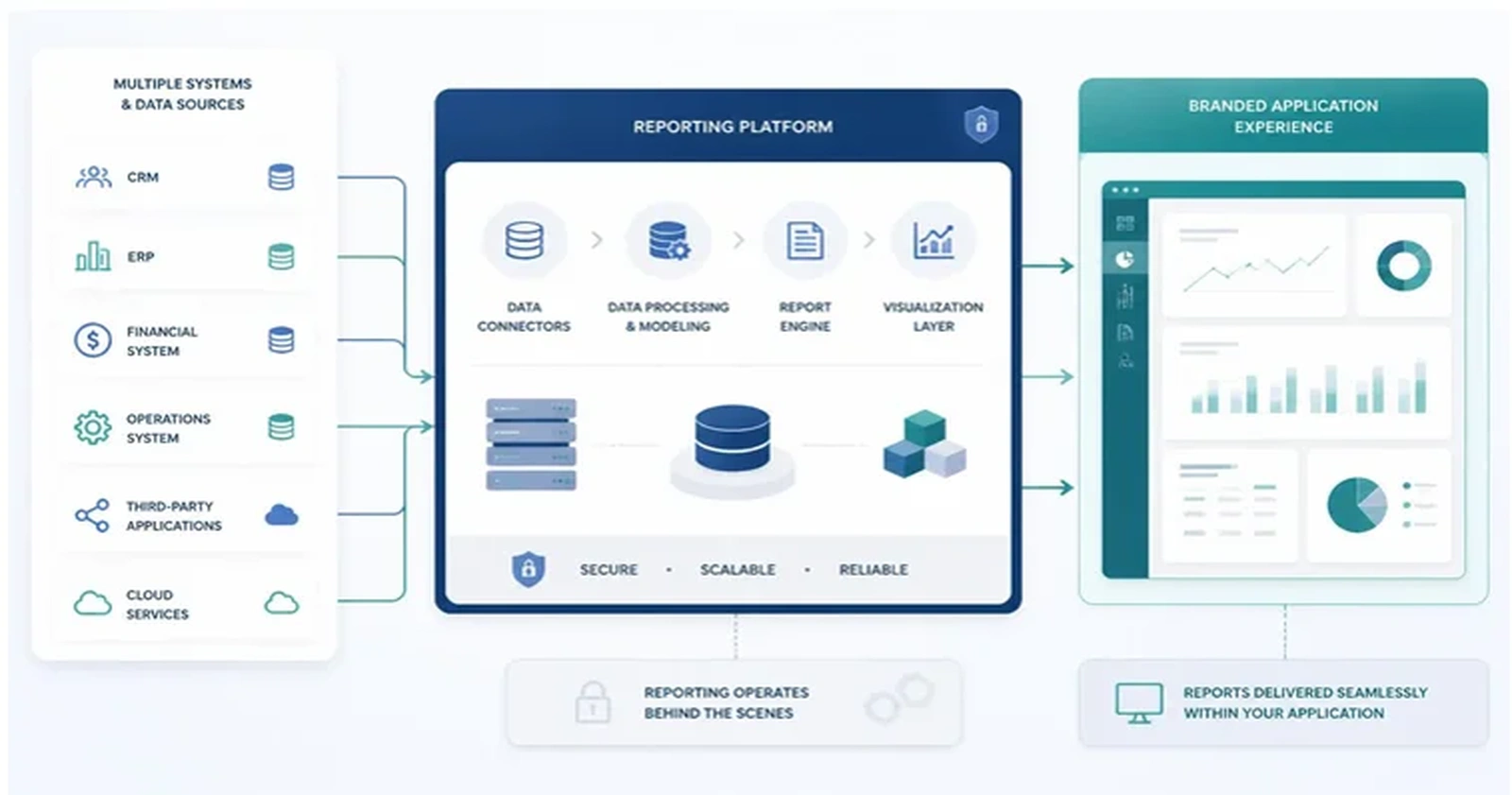
In a typical workflow, reports are delivered through the following stages:
- A user requests a report from a SaaS application, customer portal, or software product.
- The reporting API processes the request, applying user permissions, filters, tenant-specific settings, and access controls.
- The reporting engine retrieves data from connected sources such as databases, ERP systems, CRM platforms, cloud applications, and data warehouses.
- The report is generated and formatted based on predefined templates and business rules.
- Branding is applied, including logos, themes, colors, domains, and report viewer customization.
- The report is rendered in formats such as PDF, Excel, HTML, Word, or CSV.
- The finished report is delivered through an embedded report viewer or branded report portal, allowing users to access information without leaving the application.
The result is a seamless reporting experience where customers interact with your brand while the underlying reporting infrastructure remains hidden behind the scenes.
Real-world white-label reporting examples
White-label reporting is used across industries where organizations need to deliver reports to customers, partners, or stakeholders while maintaining a consistent brand experience.
Common use cases include:
-
- SaaS platforms: Embedding billing reports, operational metrics, and account summaries directly into customer portals.
- Financial institutions: Providing account statements, portfolio summaries, transaction histories, and compliance reports through branded digital experiences.
- Healthcare applications: Delivering patient reports, audit trails, compliance documentation, and operational analytics within secure environments.
- Insurance providers: Offering claims summaries, policy reports, and risk assessments through customer-facing portals.
- Enterprise software vendors: Embedding reporting directly into their products so users can access critical information without switching to a separate reporting system.
As reporting adoption grows, organizations increasingly look for solutions that support seamless integration, automation, customization, and scalability alongside core reporting capabilities.
Build vs. Buy: Should you develop or adopt a reporting platform?
Many organizations evaluating white-label reporting tools already have some reporting functionality in place. The challenge is that reporting requirements rarely remain static.
What starts as a simple reporting feature often becomes a long-term product responsibility that requires ongoing development, maintenance, and support as customer expectations evolve.
-
- Build: if reporting is a strategic part of your product and you have the resources to own and maintain it long-term.
- Buy: if your goal is to deliver reporting efficiently while keeping engineering teams focused on core product innovation.
For most organizations, the decision comes down to focus. Building offers maximum control but comes with ongoing development and maintenance obligations. Adopting a white-label reporting platform allows teams to deliver customer-facing reporting while concentrating resources on the capabilities that differentiate their product.
Beyond the build-versus-buy decision, organizations must also consider the long-term value that a reporting platform can deliver in terms of development efficiency, operational overhead, and scalability.
The ROI of investing in a white-label reporting platform
For many organizations, the ROI of a white-label reporting platform comes from reducing the engineering effort required to build and maintain their internal reporting infrastructure.
Rather than developing report designers, export engines, scheduling services, security controls, and distribution workflows from scratch, organizations can leverage an established reporting platform and focus development resources on core product innovation.
Customer feedback reinforces the value of this approach. In a G2 review, a verified mid-market user in the transportation industry said, “The custom report building feature, the easy-to-use interface, flexible pricing plans, and great support for onboarding” were aspects they liked most about Bold Reports. The review highlights several factors that can influence the value organizations derive from a reporting solution, including the ability to create customized reports, provide an intuitive user experience, offer flexible pricing options, and simplify implementation with onboarding support.
For SaaS providers, OEMs, and enterprise software vendors, the greatest return often comes from delivering customer-facing reporting faster while minimizing the resources required to maintain and extend reporting functionality over time.
Understanding white-label reporting pricing models
Pricing can vary significantly among white-label reporting vendors, making it an important part of the evaluation process.
Most reporting platforms use one or more of the following licensing models:
-
- Developer licensing: Based on the number of developers building and maintaining reporting applications.
- Server-based licensing: Based on deployment environments or production servers.
- OEM licensing: For software vendors embedding reporting within commercial products.
- Enterprise licensing: Designed for large-scale deployments with expanded support and deployment rights.
When comparing vendors, look beyond the initial licensing cost and evaluate:
-
- OEM redistribution rights
- Ongoing maintenance and support fees
- Deployment flexibility
- Scalability costs
- Long-term total cost of ownership
The most cost-effective solution is often the one that balances licensing, maintenance, and future growth requirements.
Industries that commonly use white-label reporting
White-label reporting is widely adopted in industries where reports are delivered directly to customers, partners, or external stakeholders.
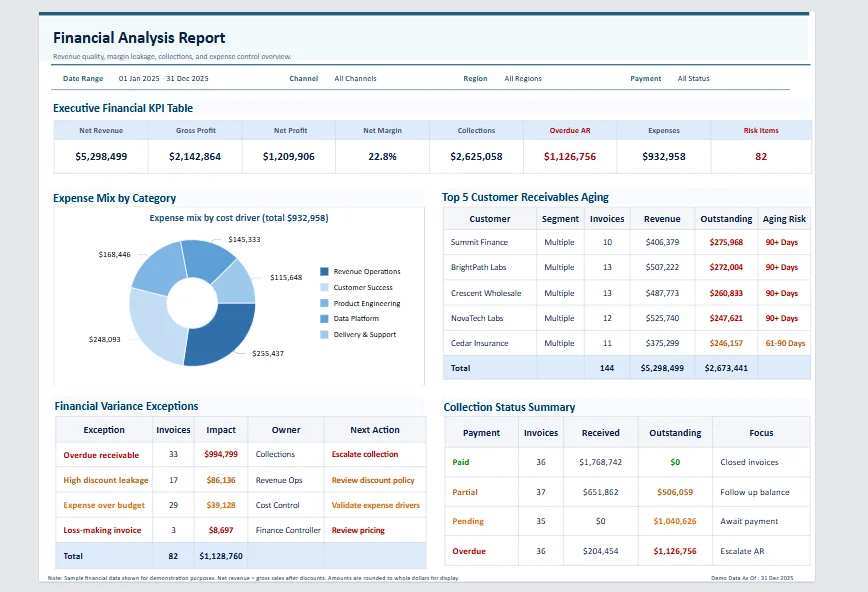
1. SaaS and software products
Provide billing reports, usage reports, account summaries, and operational reporting directly within applications.
2. Financial services
Deliver account statements, transaction reports, portfolio summaries, and compliance reporting through branded customer portals.
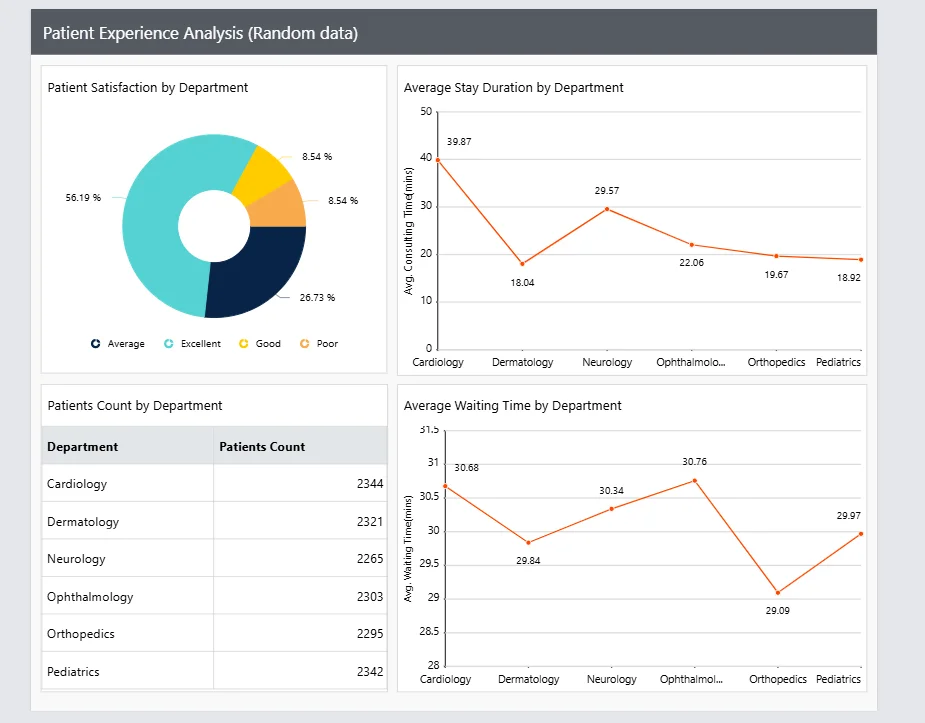
3. Healthcare
Provide patient reports, audit documentation, operational reporting, and regulatory reporting output within secure environments.
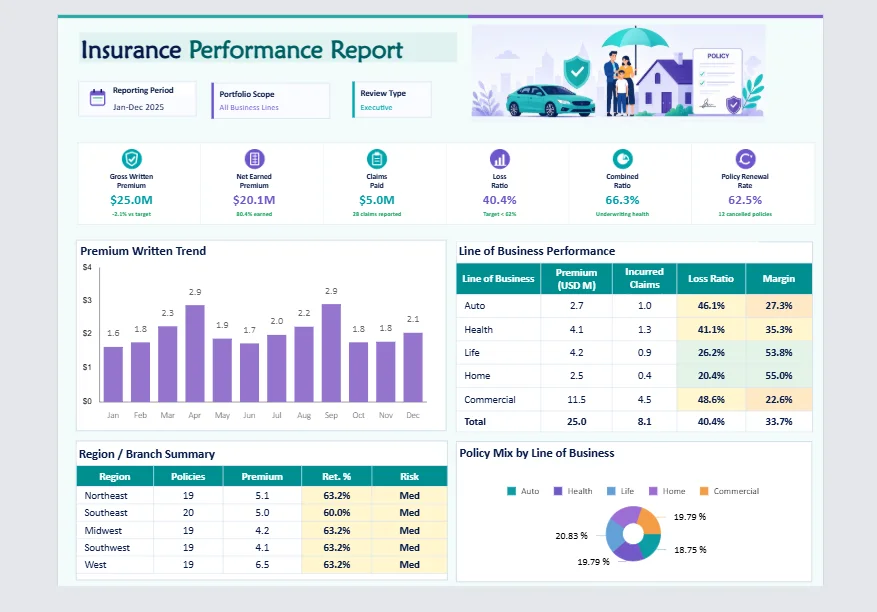
4. Insurance
Generate policy reports, claims summaries, risk reporting, and customer documentation.
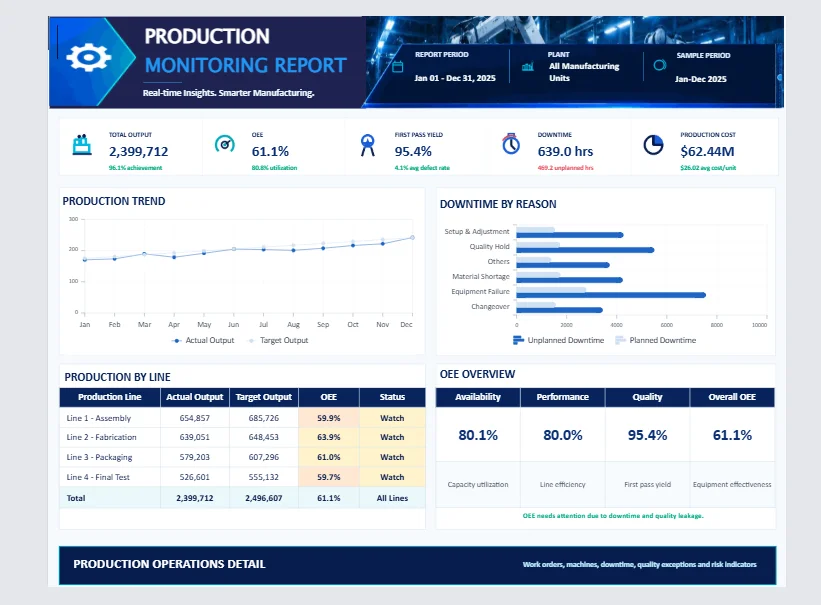
5. Manufacturing and logistics
Deliver production reports, shipment reports, inventory reporting, and operational reporting to customers and business partners.
White-label reporting vs. embedded reporting: What you should know
White-label reporting and embedded reporting are often used together, but they address different business requirements.
| White Label Reporting | Embedded Reporting |
| Focuses on branding and customization | Focuses on integrating reporting into applications |
| Delivers reports under your company’s brand | Delivers reports within an existing product experience |
| Emphasizes customer-facing experiences | Emphasizes application integration |
| May include branded portals and report delivery | May include SDKs, APIs, and embedded viewers |
| Often used for SaaS and customer reporting | Often used for enterprise applications and software products |
Many enterprise organizations require both capabilities. Embedded reporting helps integrate reports into applications, while white-label reporting ensures those reports align with the organization’s branding and customer experience requirements.
7 white-label reporting tools to evaluate in 2026
1. Bold Reports
Best for: SaaS providers, OEMs, and enterprises delivering branded customer-facing reporting.
Key strengths:
-
- White-label customization for report viewers, portals, and reporting experiences
- Multi-tenant architecture for serving multiple customers from a centralized environment
- OEM redistribution support for embedding reporting into commercial software products
Licensing: Community, Professional, Enterprise, and OEM plans.
Limitation: Advanced multi-tenant deployments may require additional configuration and planning.
Consideration: Particularly well-suited for organizations that need embedded reporting, customer-facing portals, and software redistribution under their own brand.
2. Telerik Reporting
Best for: Organizations building customer-facing reporting within .NET applications.
Key strengths:
-
- Tight integration with ASP.NET, Blazor, WinForms, and WPF
- Embedded reporting support for Microsoft-based applications
- Strong alignment with the Telerik development ecosystem
Licensing: Per-developer licensing, with additional options available through Telerik DevCraft bundles.
Limitation: Delivers the greatest value within Microsoft-centric technology environments.
Consideration: A strong option for teams already using Telerik UI components and other Telerik development tools.
3. Izenda
Best for: Customer-facing applications that require self-service reporting.
Key strengths:
-
- Embedded reporting designed for customer portals and SaaS applications
- Browser-based report creation for business users and external customers
- Self-service reporting capabilities that reduce dependence on development teams
Licensing: Quote-based enterprise licensing.
Limitation: Pricing typically requires direct engagement with the vendor sales team.
Consideration: Evaluate branding and white-label customization options carefully if a seamless customer experience is a priority.
4. Jaspersoft
Best for: Enterprises supporting reporting across multiple systems, customers, and business units.
Key strengths:
-
- Embedded reporting capabilities for customer, partner, and supplier portals
- Broad connectivity across enterprise databases and business systems
- Flexible deployment options for large-scale reporting environments
Licensing: Commercial subscription licensing.
Limitation: Administration and implementation can be more complex than some alternatives.
Consideration: Often a good fit when reporting must span diverse applications, departments, and data sources.
5. Logi Report
Best for: Enterprise applications requiring embedded customer-facing reporting.
Key strengths:
-
- Strong focus on application-embedded reporting and delivery
- Interactive reporting experiences for operational workflows
- Enterprise-grade governance, security, and administration controls
Licensing: Enterprise licensing.
Limitation: Larger deployments may require additional planning for governance and administration.
Consideration: Organizations should assess reporting management requirements early when planning enterprise-wide implementations.
6. Stimulsoft
Best for: Teams building highly customized reporting experiences.
Key strengths:
-
- Customizable report viewers and reporting interfaces
- Embedded reporting support across .NET, JavaScript, Angular, React, and Blazor
- Flexible branding and presentation options for customer-facing applications
Licensing: Per-developer licensing.
Limitation: Extensive customization can increase long-term maintenance effort.
Consideration: Best suited for projects where tailoring the reporting experience is a key business requirement.
7. ActiveReports
Best for: Developer-led reporting projects and embedded .NET reporting scenarios.
Key strengths:
-
- Embedded reporting support for custom business applications
- Extensive control over report generation, rendering, and exports
- Flexible developer-focused integration capabilities
Licensing: Per-developer licensing.
Limitation: Customer-facing reporting experiences may require additional customization.
Consideration: A strong choice when reporting functionality is built and maintained primarily by engineering teams rather than business users.
Top 7 white-label reporting tools side-by-side evaluation table
Not all white-label reporting platforms provide the same level of branding customization, embedded reporting capabilities, deployment flexibility, or multi-tenant support. The table below offers a high-level comparison of leading white-label reporting tools based on the capabilities most commonly evaluated during the selection process.
| Platform | White-Labeling | Reporting Features | Deployment | Licensing | Best Fit | Drawback |
| Bold Reports | Advanced customization, OEM-ready | Designer, scheduling, exports, embedded reporting | Cloud & Self-hosted | Community, Professional, Enterprise, OEM | SaaS, OEMs, Enterprise | Learning curve for advanced deployments |
| Telerik Reporting | Customizable | Designer, scheduling, exports | .NET-focused | Per-developer | .NET applications | Primarily focused on Microsoft ecosystems |
| Izenda | Advanced customization | Self-service, scheduling, exports | Cloud & Hosted | Custom quote | Customer-facing reporting | Pricing requires sales engagement |
| Jaspersoft | Advanced customization | Designer, exports, embedded reporting | Flexible | Subscription-based | Large enterprises | More complex administration |
| Logi Report | Advanced customization | Embedded reporting, scheduling, exports | Flexible | Enterprise licensing | Embedded enterprise reporting | Additional governance planning |
| Stimulsoft | Customizable | Designer, exports, embedded reporting | Flexible | Per-developer | Custom reporting apps | Higher maintenance with heavy customization |
| ActiveReports | Customizable | Designer, exports, embedded reporting | .NET-focused | Per-developer | Developer-focused projects | Limited SaaS multi-tenancy focus |
While the comparison table provides a useful overview, organizations should also evaluate:
-
- Report designer capabilities
- Export format support
- Report scheduling options
- OEM and enterprise licensing models
- Free trial availability
- Open-source availability
- Suitability for small, mid-sized, or enterprise deployments
These considerations often influence implementation effort, scalability, and total cost of ownership.
What matters most when evaluating white-label reporting tools?
Many reporting platforms appear similar during initial evaluations. The differences often become more apparent when organizations begin deploying reporting at scale.
-
- Branding and white-label flexibility: Look beyond logo replacement. Enterprises often require branded report portals, customized report viewers, themes, domains, and user experiences.
- Embedded reporting support: Reports should integrate naturally into SaaS applications, customer portals, and enterprise software products without forcing users into external systems.
- Report distribution capabilities: Evaluate scheduling, subscription delivery, automated distribution, and centralized report management capabilities.
- Deployment flexibility: Ensure the platform supports cloud, self-hosted, or hybrid deployment models that align with business requirements.
- Multi-tenant support: Organizations serving multiple customers should evaluate tenant separation, administration controls, and customer isolation capabilities.
- Security and governance: Reporting platforms should support authentication integrations, role-based access controls, auditing, and compliance requirements.
- Scalability: The platform should continue performing reliably as users, customers, report volumes, and workloads increase.
The most successful enterprise implementations typically focus less on feature counts and more on how well a platform aligns with branding requirements, deployment preferences, customer experience goals, and long-term scalability.
Most overlooked factor when evaluating white-label reporting tools
Many organizations focus heavily on report designers, visualizations, and export formats during product evaluations. While these capabilities are important, they are rarely what determines long-term success.
Review trends from Bold Reports users reveal that implementation experience, integration flexibility, usability, and support quality are recurring themes alongside reporting functionality. This suggests that organizations often realize the true value of a reporting platform after deployment, when factors such as scalability, administration, tenant management, and embedded integration become more important than individual report design features.
The capabilities that influence purchasing decisions are not always the capabilities that drive long-term satisfaction. Customer feedback indicates that ease of integration and day-to-day usability frequently have a greater impact on success than feature comparisons alone.
Common challenges when comparing white-label reporting tools
Many white label reporting tools offer similar capabilities on the surface, making it difficult to identify the right fit for your reporting requirements. During the evaluation process, organizations often face challenges such as:
-
- Comparing branding capabilities: Some reporting tools support basic logo and theme changes, while others provide deeper customization of report viewers, portals, and customer-facing experiences.
- Evaluating embedded reporting support: White-label reporting tools differ significantly in how easily reports can be integrated into SaaS applications, customer portals, and software products.
- Assessing deployment flexibility: Cloud, self-hosted, and hybrid deployment options vary across reporting tools and can influence infrastructure, governance, and data control requirements.
- Understanding multi-tenant capabilities: Not all white-label reporting tools provide the same level of tenant isolation, customer management, and centralized administration.
- Balancing features with scalability: A reporting tool may meet current requirements but struggle to support growing user bases, report volumes, and customer-facing workloads over time.
By understanding these differences, organizations can evaluate white-label reporting tools more effectively and focus on the capabilities that matter most to their reporting strategy.
White-label reporting buyer’s checklist
Before selecting a white label reporting platform, evaluate the following:
- Branding: Can reports, portals, and viewers be delivered under your brand?
- Embedding: Can reporting be integrated seamlessly into your application or customer portal?
- Multi-Tenancy: Can multiple customers be managed securely from a centralized environment?
- Deployment: Does the platform support your preferred cloud, self-hosted, or hybrid deployment model?
- Security: Does it meet your organization’s security, governance, and compliance requirements?
- Scalability: Can it support future growth in users, customers, and reporting workloads?
A platform that performs well across these areas is more likely to support both immediate reporting needs and long-term business growth.
Why Bold Reports stands out among white label reporting tools
Many white-label reporting platforms support basic branding and report embedding. However, enterprise reporting often requires a broader set of capabilities to support customer-facing applications, SaaS products, and multi-tenant environments.
Bold Reports differentiates itself through:
-
- Comprehensive white-label customization: Customize report viewers, portals, themes, and branding elements to create a reporting experience that aligns with your product identity.
- Enterprise-ready deployment options: Choose cloud or self-hosted deployment models based on infrastructure, governance, and compliance requirements.
- Integrated embedded reporting: Deliver reports directly within applications, portals, and software products without redirecting users to external reporting environments.
- Multi-tenant reporting architecture: Support multiple customers from a centralized reporting environment while maintaining data separation and administration controls.
- Built-in report distribution: Schedule, generate, and distribute reports across teams, customers, and stakeholders.
- Self-service reporting capabilities: Enable users to access and interact with reports while maintaining administrative oversight.
For enterprises evaluating white-label reporting platforms, these capabilities help bridge the gap between basic report branding and fully integrated customer-facing reporting experiences.
Future trends in white label reporting
As reporting becomes a more visible part of the customer experience, organizations are placing greater emphasis on platforms that can support future reporting requirements.
-
- Embedded reporting becomes standard: More SaaS providers and software vendors are making reporting a built-in product capability rather than an optional add-on.
- Growth of self-service reporting: Users increasingly expect the ability to access and customize reports without relying heavily on development teams.
- Expansion of multi-tenant reporting: As customer bases grow, organizations require reporting environments capable of securely supporting multiple customers from a centralized platform.
- Greater deployment flexibility: Cloud, self-hosted, and hybrid deployment models continue to influence buying decisions, particularly in regulated industries.
- AI-assisted reporting experiences: Reporting vendors are increasingly introducing AI-assisted capabilities that simplify report creation, administration, and report management.
Organizations evaluating reporting platforms today should consider how well a solution can support these evolving requirements in the years ahead.
Final thoughts
Choosing a white-label reporting platform is about more than adding reports to an application. The right solution should support your branding goals, fit your deployment requirements, and provide a reporting experience that scales with your customers and business.
While the platforms covered in this guide offer different approaches to white-label reporting, enterprises should prioritize capabilities such as branding customization, embedded reporting, deployment flexibility, and multi-tenant support when evaluating their options.
For organizations looking to deliver customer-facing reporting without building and maintaining reporting infrastructure from scratch, Bold Reports provides the tools needed to create branded, embedded, and scalable reporting experiences across SaaS products, customer portals, and enterprise applications.
If you’re exploring white-label reporting for your organization, start a free trial or request a personalized demo to see how Bold Reports can help you deliver reporting under your own brand.
Frequently asked questions
- 1.
What is a white label reporting tool?
A white-label reporting tool enables organizations to deliver reports under their own brand rather than the vendor’s. It typically includes branding customization, report distribution, and customer-facing reporting capabilities that can be embedded into applications, portals, or software products.
- 2.
What features should enterprises look for in a white label reporting tool?
Key features include branding customization, embedded reporting, deployment flexibility, report scheduling, security controls, multi-tenant support, and self-service reporting. The right combination depends on your reporting strategy and customer requirements.
- 3.
What is the difference between white label reporting and embedded reporting?
White label reporting focuses on branding and delivering reports under your company’s identity, while embedded reporting focuses on integrating reports directly into applications or portals. Many enterprise platforms support both capabilities.
- 4.
Can white label reporting platforms support multi-tenant environments?
Yes. Many enterprise reporting platforms support multi-tenant architectures that allow organizations to provide customer-specific reporting experiences while centrally managing users, permissions, and reporting assets.
- 5.
Should enterprises choose cloud or self-hosted white label reporting?
The choice depends on business, security, and compliance requirements. Cloud deployments can simplify infrastructure management, while self-hosted deployments offer greater control over data, security, and system administration.
- 6.
How do enterprises choose the right white label reporting platform?
Start by identifying your requirements for branding, embedded reporting, deployment, scalability, and customer management. The best platform is the one that aligns with your business goals, technical requirements, and long-term reporting strategy.