Embedded Reporting Tool for SaaS: Features & Why It’s Needed
TL;DR: An embedded reporting tool helps SaaS businesses deliver reports and analytics directly inside their applications. In 2026, this is important for improving user experience, enabling faster decision-making, reducing development effort, and delivering more value to customers. This guide explains the key benefits of embedded reporting for SaaS, the features to look for, and how to choose the right platform.
Introduction
In 2026, reporting is no longer just an added feature in SaaS applications. It has become an important part of how SaaS platforms deliver value to customers. Users expect to access reports and explore their data without leaving the application they’re presently using.
This is why more SaaS teams are adopting embedded reporting as part of their product strategy. By integrating reporting directly into the application, SaaS businesses can create a more seamless user experience, support faster decision-making, and make their products more useful and competitive.
This guide explores the benefits of using an embedded reporting tool for SaaS in 2026, the must-have features to evaluate, and what makes Bold Reports® stand out as an embedded reporting platform.
What is embedded reporting for SaaS?
An embedded reporting tool for SaaS allows software teams to integrate reports directly into their SaaS application. Instead of sending users to a separate reporting platform, it enables them to view, create, and interact with reports within the same application they already use.
Why do SaaS product teams need embedded reporting tools in 2026?
In 2026, SaaS product teams need embedded reporting to deliver seamless, in-app insights that improve user experience and eliminate tool switching. This helps them in several ways:
Deliver a better user experience
Users do not want to leave the application to access reports or analytics. When reporting is embedded directly into the product, everything they need is available in one place. This creates a smoother, more intuitive experience and helps the product feel more complete.
Support faster decision-making
When users can access insights instantly, they can respond without delays. They do not have to wait for scheduled reports or rely on other teams to provide data. This improves responsiveness and helps customers make more informed decisions at the right time.
Increase product adoption and retention
When data is easier to access and use, users are more likely to rely on the product as part of their daily workflow. Embedded reporting makes the application more useful and more central to the customer experience. This can lead to stronger engagement, higher adoption, and better long-term retention.
Reduce development and maintenance effort
Building reporting capabilities from scratch takes time, engineering resources, and ongoing maintenance. An embedded reporting solution helps product teams avoid that burden by providing ready-to-use functionality. This allows teams to move faster and focus more on core product development.
Empower users with self-service reporting
Modern users expect more control over how they work with data. Embedded reporting gives them the ability to create, customize, and manage reports on their own, without depending on support teams for every request. This improves user satisfaction while reducing operational overhead.
Provide scalable and secure data access
As SaaS products grow, reporting must scale without compromising data security. Embedded reporting helps ensure that each user or tenant can access only the data relevant to them. This supports trust, compliance, and smooth scaling across multiple customers and environments.
Save time by reusing existing reports
For teams that already use RDL reports, embedded reporting can reduce migration effort by allowing those reports to be reused instead of rebuilt from the ground up. This speeds up implementation and helps teams deliver reporting features faster.
Improve user independence and efficiency
When users can create and manage reports on their own, they become less dependent on internal teams for routine reporting needs. This reduces support requests, improves efficiency, and makes the product more valuable for everyday use.
Key features to look for in an embedded reporting tool for SaaS
When choosing an embedded reporting tool for a SaaS application, focus on features that support seamless integration, secure tenant-level access, scalability, and a consistent in-app experience. The right solution should help you deliver insights quickly without adding unnecessary development complexity:
-
- Extensibility & APIs: Look for REST APIs and JavaScript SDKs that let you embed, control, and automate reporting directly within your SaaS application.
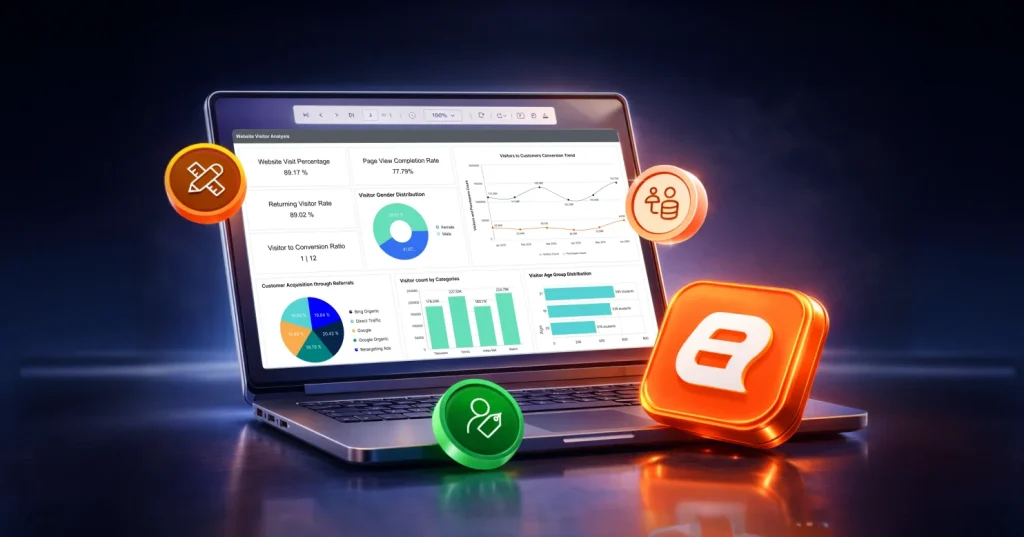
- Rich data visualization: The tool should support charts, tables, KPIs, and other visuals that make data easier for users to understand and act on.
- Easy data integrations: Choose a solution that connects easily to SQL databases, cloud sources, files, and REST APIs to support diverse reporting needs.
- Self-service reporting: The tool should allow your users should be able to create, edit, and customize reports on their own without relying heavily on developers or support teams.
- SSRS compatibility: The tool should provide support for SSRS (RDL) reports helps teams migrate existing reports faster without rebuilding them from scratch.
- Collaborate reporting: The platform should make it easy to share reports, schedule delivery, and export insights for broader team use.
- Deployment flexibility: The platform should offer support for cloud, on-premises, and hybrid deployment helps SaaS teams meet different infrastructure and compliance needs.
- Multi-format exporting: The embedded reporting tool should support exporting to formats such as PDF, Excel, Word, and HTML to make reports more practical for sharing, auditing, and offline use.
- Enterprise authentication: The tool should support SSO, OAuth, OpenID Connect, and Active Directory to ensure secure and controlled user access.
- White-label reporting: The tool should offer custom branding options such as logos, colors, and domains help the reporting experience feel native to your product.
- Multi-tenant support: The platform should support multiple tenants in one environment while keeping each customer’s data isolated and secure.
- Scalable security: Look for features like role-based access, data-level security, and encryption to protect sensitive data as your SaaS product grows.
How Bold Reports helps implement embedded reporting in SaaS
Implementing embedded reporting in a SaaS application involves integrating reports into the product, managing data access, and enabling users to work with reports as part of their workflow.
With Bold Reports, this can be handled in a structured way:
-
- Embed reports directly into your application UI: Use APIs and SDKs to integrate reports into dashboards or pages, so users can access insights without leaving the product.
- Manage multi-tenant data access securely: Control data visibility based on users, roles, or customers to ensure each tenant only sees relevant data.
- Enable users to interact with reports within the product: Allow users to view, customize, export, and schedule reports as part of their regular workflow.
- Reuse existing reports to reduce development effort: Support for RDL (SSRS) reports helps teams avoid rebuilding reports from scratch and speeds up implementation.
- Handle report delivery and manage reports control: Use scheduling and role-based access to manage how reports are shared and who can access them.
This approach allows SaaS teams to introduce reporting capabilities without building and maintaining all components internally, while keeping the experience consistent within the product.
Get started with embedded reporting
In 2026, SaaS applications are expected to deliver built-in analytics as a core feature. Bold Reports® stands out by offering a balance of seamless embedding, multitenant support, scalability, and ease of use, making it easier for SaaS teams to deliver reliable, secure, and fully integrated reporting experiences.
Try Bold Reports for free or request a demo to see how you can deliver accurate, embedded reports efficiently.
Frequently asked questions
- 1.
What are embedded reporting tools?
They are platforms designed to integrate reporting capabilities directly into applications rather than operate as standalone analytics products.
- 2.
Are embedded reporting tools only relevant for SaaS?
No. They are also used in internal systems, portals, and commercial software products.
- 3.
How do embedded reporting tools differ from traditional BI platforms?
Embedded reporting tools are typically evaluated as application infrastructure and focus on integration, scalability, and controlled access.
- 4.
What should teams prioritize when choosing an embedded reporting tool?
Common priorities include embedding approach, security, customization needs, scalability, deployment flexibility, and licensing models.
- 5.
What are embedded reporting tools used for?
They are used to deliver operational reports, customer‑facing analytics, internal dashboards, and compliance reports as part of a software application.