Why SSRS Still Powers Enterprise Reporting in 2026
TL; DR
SSRS continues to power enterprise reporting in 2026 because organizations still depend on paginated reports, operational reporting workflows, and large existing RDL report libraries. While modern BI platforms offer interactive dashboards, many enterprises require reliable pixel-perfect reporting, scheduled distribution, and deep Microsoft ecosystem integration. Platforms like Bold Reports® help modernize SSRS environments without requiring complete report rewrites.
Introduction
For nearly two decades, SQL Server Reporting Services (SSRS) has been a trusted enterprise reporting platform in the Microsoft ecosystem. In 2026, many organizations still rely on it for operational reporting, compliance, invoicing, and large-scale scheduled reports. Despite the growth of modern analytics and cloud BI tools, SSRS remains embedded in enterprise environments. However, organizations are increasingly evaluating alternatives. Why? Because while SSRS continues to meet critical reporting needs, evolving business expectations, modernization efforts, and infrastructure challenges are exposing its limitations.
As a result, enterprises today face two realities: SSRS remains essential, and a more modern path forward is still needed.
Why enterprises still depend on SSRS in 2026
The continued dominance of SSRS is not accidental. Enterprise reporting requirements have remained remarkably consistent over the years, and organizations still need reliable, structured, and highly formatted reporting solutions that support day-to-day operations, regulatory needs, and automated distribution workflows. SSRS continues to deliver these capabilities consistently, which is why it remains widely adopted across enterprises.
1. Stable, mature, and proven
Stability often matters more than trends for many organizations. SSRS has powered large-scale reporting environments for more than two decades with proven reliability and predictable performance. In industries with strict compliance and operational requirements, consistency is frequently valued more than visually modern dashboards.
Over time, many organizations have come to view SSRS as critical infrastructure embedded deeply into business processes and enterprise operations. Replacing it is rarely seen as a simple technology upgrade. It’s often considered a significant operational risk.
2. Deep Microsoft ecosystem integration
SSRS is tightly integrated with the Microsoft ecosystem, including SQL Server, Active Directory, Windows Authentication, and .NET applications. Over time, it has become deeply embedded within enterprise architectures, connecting databases, applications, and operational workflows, making it difficult to replace without broader system disruption.
3. Thousands of existing RDL reports
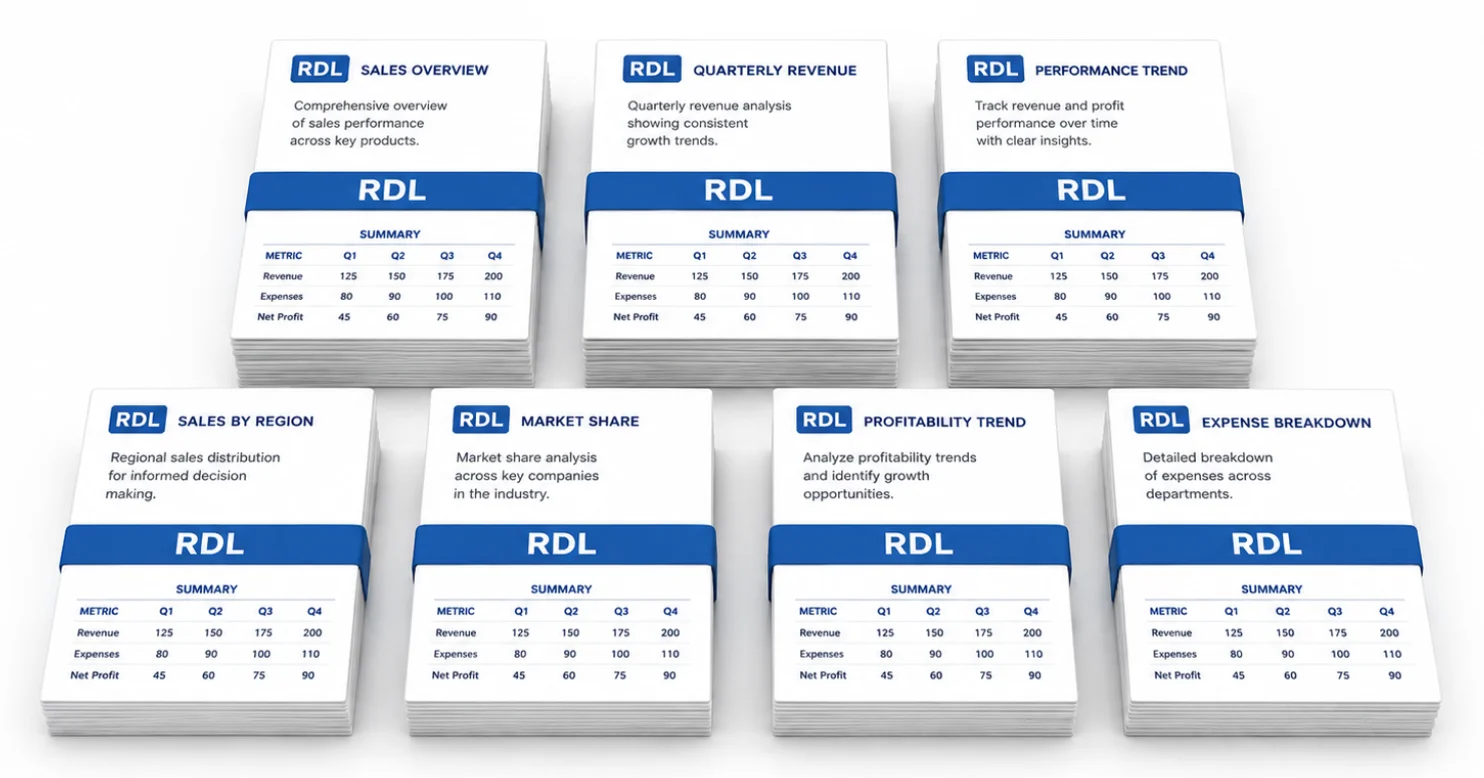
Most enterprises don’t maintain just a handful of reports; they manage thousands of RDL files containing years of embedded business logic, custom expressions, scheduling rules, and department-specific workflows. Rebuilding and validating these reporting systems from scratch is rarely practical. For many organizations, SSRS has evolved beyond a reporting tool into deeply embedded institutional infrastructure.
4. Continued need for paginated reporting
While modern BI tools excel at dashboards, businesses still depend on structured, print-ready documents like invoices, financial statements, and regulatory forms. SSRS remains highly effective for producing pixel-perfect, paginated reports and exports in formats like PDF and Excel.
5. Predictable and cost-effective deployment
For many organizations, SSRS is already included within SQL Server environments, eliminating the need for additional licensing costs. Unlike modern tools with usage-based pricing, SSRS offers predictable and stable economics.
6. Trusted for mission-critical reporting
SSRS is widely used for financial reporting, compliance documentation, and legal records, areas where failure is not acceptable. Enterprises continue to rely on it because they have a long history of dependable performance in high-stakes scenarios.
What’s holding enterprises back from migrating away from SSRS?
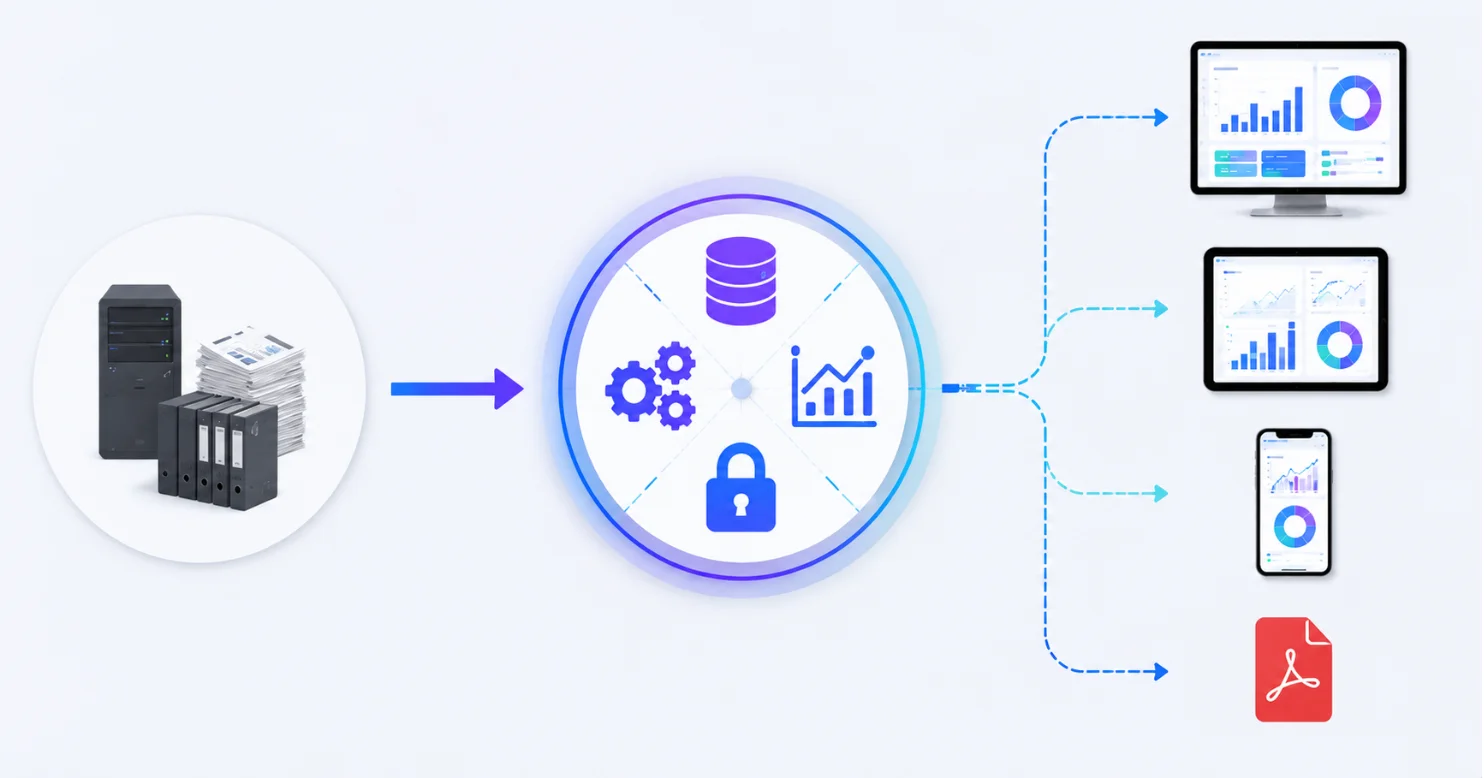
Most enterprises know modernization is necessary, but very few are ready for a full-scale SSRS migration.
And the hesitation is justified. Here are just a few reasons organizations put off migration.
Reporting migration is expensive and risky
Enterprise reporting systems are deeply tied to business operations, making migration far more complex than vendors often suggest. Moving away from SSRS usually means:
-
- Rebuilding reports manually.
- Revalidating business logic.
- Retesting workflows.
- Recreating permissions and scheduling.
- Reworking integrations.
Even small reporting differences can create major operational problems. That’s why many organizations face migration paralysis: modernization feels necessary, but rebuilding everything feels riskier.
Critical business logic lives inside reports
SSRS reports are not just visual templates. Over time, enterprises have embedded critical logic into:
-
- Stored procedures.
- Parameters and filters.
- Visibility rules.
- Calculations and aggregations.
- Custom code.
In many organizations, key operational rules exist only inside reports. The real challenge is not just in redesigning reports but in preserving business behavior accurately during migration.
Modern BI tools don’t fully replace SSRS
Modern BI platforms and SSRS serve different purposes.
| Modern BI platforms | SSRS |
| Interactive dashboards | Operational reporting |
| Visual analytics | Pixel-perfect documents |
| Ad hoc data exploration | Scheduled report delivery |
| Executive insights | Transactional workflows |
| Self-service reporting | Centralized report generation |
| Real-time data interaction | Batch and paginated outputs |
Tools like Power BI and Tableau are strong in analytics, but they may not fully replace operational reporting. Many enterprises still rely on:
-
- Compliance documents.
- Printable forms.
- Batch-generated reports.
- Multipage paginated outputs.
As a result, organizations often end up maintaining both systems.
Legacy infrastructure is hard to modernize
Many SSRS environments are built on architectures that no longer align with modern standards. Organizations still deal with:
-
- Legacy ReportViewer controls.
- WebForms dependencies.
- Limited mobile support.
- Older UI frameworks.
- Difficult embedding experiences.
- Restricted cloud flexibility.
The reporting engine may still be reliable, but the surrounding ecosystem feels outdated. As enterprises invest in cloud and application modernization, expectations have shifted toward better user experiences, simpler embedding, modern APIs, and flexible deployment. In 2026, enterprises are not just looking to replace SSRS, but to modernize reporting without losing years of existing investment.
The real problem is modernization
The conversation around SSRS is more complex than simply calling it outdated. SSRS itself is not “dead.” In fact, many enterprises are still satisfied with their core reporting capabilities. The real challenge is that enterprise application architecture has evolved faster than traditional reporting infrastructure. Modern organizations now expect:
-
- Web-based experiences.
- Embedded analytics.
- Cloud deployment flexibility.
- API-driven integrations.
- Responsive interfaces.
- Multitenant support.
- Cross-platform compatibility.
Legacy SSRS environments were never designed for these modern expectations. As a result, most enterprises are not looking for a complete SSRS replacement. They’re looking for a modernization path that preserves existing reporting investments while adapting to modern application needs. In enterprise environments, continuity is often more valuable than disruptive rewrites.
How Bold Reports helps enterprises modernize SSRS reporting
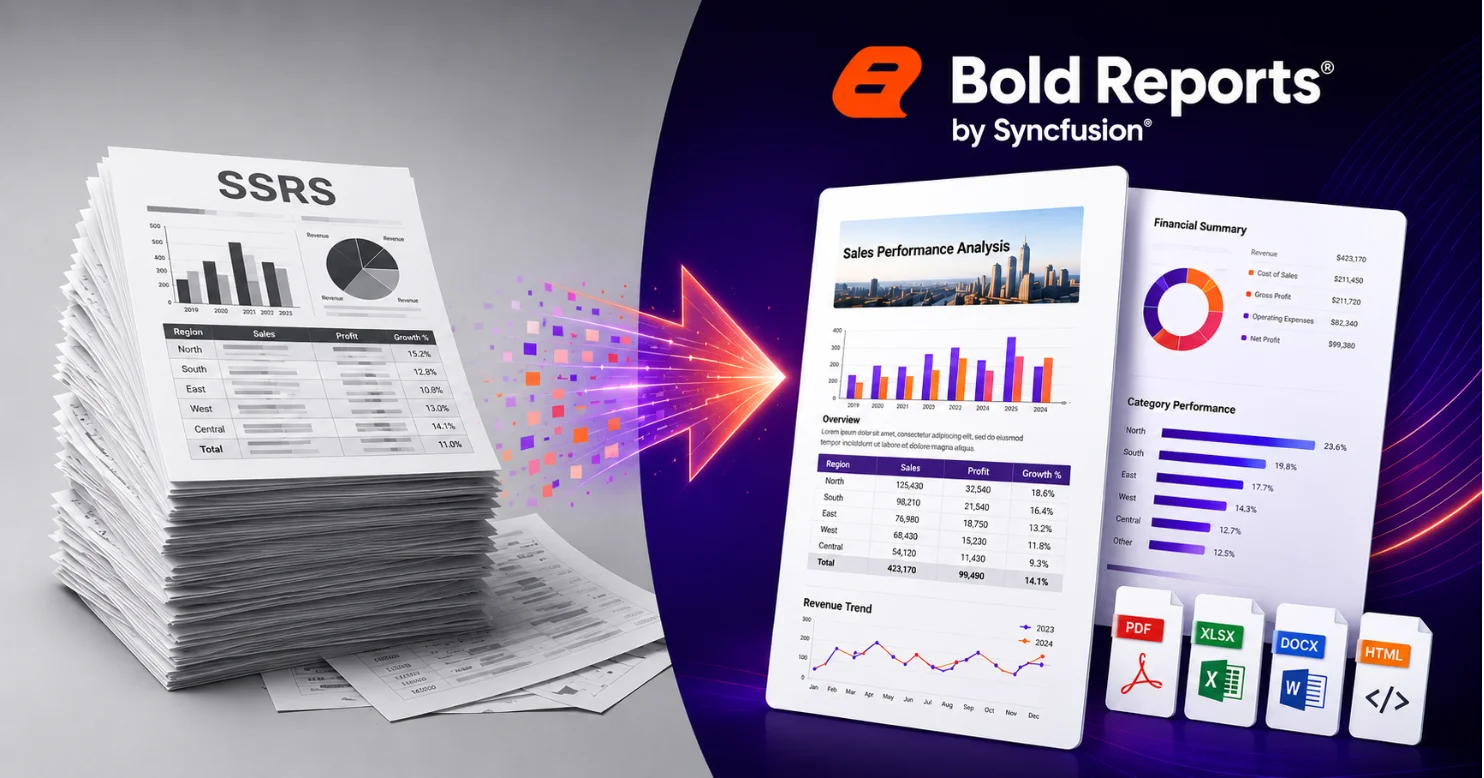
This is where Bold Reports offers a practical approach. Instead of forcing enterprises to replace their entire reporting infrastructure, it helps modernize SSRS environments while preserving existing RDL investments. That changes the migration strategy completely. Rather than rebuilding thousands of reports, organizations can modernize what they already have.
1. Modern SSRS experience without rebuild
-
- Native RDL support: Continue using your existing SSRS reports without converting them into a new format.
- No need to recreate reports: Avoid the time and cost of rebuilding reports, preserving years of business logic and design.
2. Purpose-built for operational reporting
-
- Pixel-perfect outputs: Deliver highly formatted, print-ready reports required for invoices, statements, and compliance.
- Scheduling and automation: Maintain automated report generation and distribution workflows critical to daily operations.
- Reliable document generation: Ensure consistent, high-volume report delivery without performance tradeoffs.
3. Built for embedded and modern apps
-
- API-first design: Integrate reporting capabilities directly into applications using flexible developer APIs.
- Seamless integration into SaaS platforms: Embed reports into customer-facing or internal apps without complex infrastructure changes.
4. Flexible deployment
-
- Cloud: Scale reporting easily with cloud-native deployment options.
- On premises: Maintain control in environments with strict data or compliance requirements.
- Hybrid: Combine cloud and on-premises setups to meet evolving business and technical needs.
Instead of forcing migration, platforms like Bold Reports allow you to keep what works and modernize everything around it.
Conclusion
While modern tools have transformed analytics and dashboards, they have not replaced the need for structured reporting workflows. The real challenge organizations face is not whether SSRS should be replaced, but how to evolve their reporting strategy without incurring the cost and complexity of rebuilding everything.
This is where modern reporting platforms like Bold Reports come in, allowing teams to bring their existing SSRS reports into a modern, scalable environment without rewriting them. By combining the reliability of SSRS with modern capabilities, organizations can move faster, reduce costs, and deliver better reporting experiences without disruption, with options to request a personalized demo or start a 30-day free trial to accelerate their modernization journey.
Frequently asked questions
- 1.
What are the limitations of SSRS?
SSRS limitations include outdated web experiences, limited modern embedding capabilities, older deployment models, and reduced flexibility for cloud-native applications. Many organizations modernize SSRS environments to improve scalability, accessibility, and web-based reporting experiences.
- 2.
Is Power BI replacing SSRS?
No. Power BI and SSRS serve different purposes. Power BI focuses on dashboards and interactive analytics, while SSRS is primarily used for paginated reporting, operational documents, scheduled reporting, and print-ready business reports.
- 3.
What is the best SSRS alternative?
The best SSRS alternative depends on business requirements. For enterprises wanting to modernize existing RDL reports without rebuilding everything, Bold Reports is a popular option because it supports native RDL compatibility and modern web-based reporting.
- 4.
Can SSRS reports be migrated without rebuilding?
Yes. Platforms that support native RDL files allow organizations to migrate SSRS reports without complete rewrites. This helps enterprises preserve existing report layouts, parameters, and business logic while modernizing reporting infrastructure.
- 5.
What makes Bold Reports a modern SSRS replacement platform?
Bold Reports helps organizations modernize SSRS reporting with embedded reporting, web-based report viewing, cloud-ready deployment, and native RDL support. As a modern reporting platform, it enables enterprises to embed SSRS reports into applications built with ASP.NET Core, React, Angular, and JavaScript while preserving existing reporting investments and reducing large-scale redevelopment efforts.